







What Is AEO, GEO, and LLMO? Breaking Down the New SEO Layers
What Do These Acronyms Actually Mean?
Before comparing them, it helps to define each one:
-
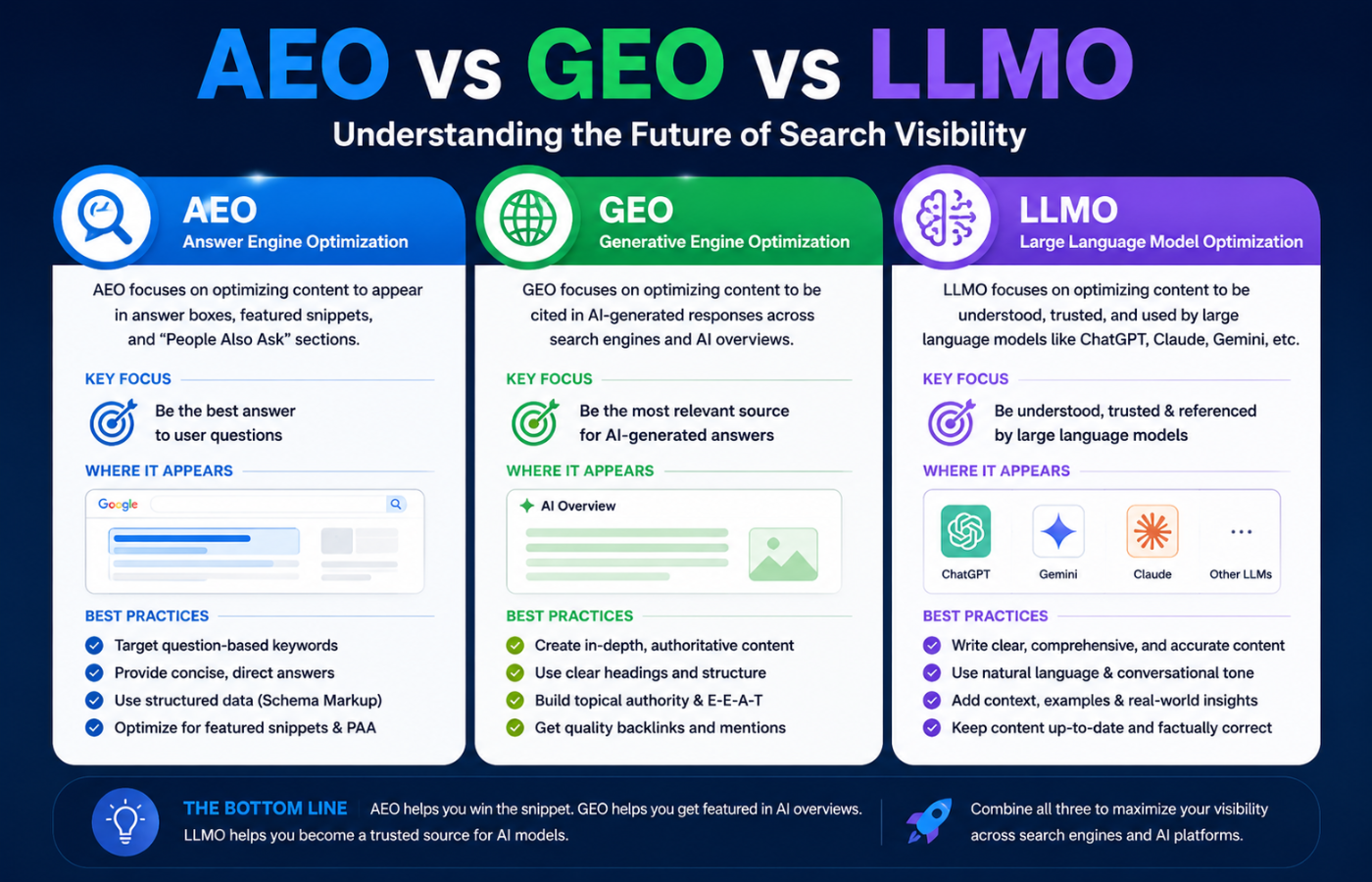
AEO (Answer Engine Optimization): Focuses on structuring your content so search engines can extract a direct answer for featured snippets, voice search, and “People Also Ask” boxes . It’s about formatting content for clarity and scannability.
-
GEO (Generative Engine Optimization): Helps your content become the kind of source generative AI systems prefer to summarise and cite in AI Overviews and tools like Perplexity . It emphasises depth, authority, and trustworthiness (E-E-A-T).
-
LLMO (Large Language Model Optimization): Focuses on how large language models understand, interpret, and reference your brand in conversational AI responses . It emphasises entity consistency, brand clarity, and unique insights that models can incorporate.
How AEO vs GEO vs LLMO Compare
Here is a breakdown of how AEO vs GEO vs LLMO differ across key dimensions :
| Aspect | AEO | GEO | LLMO |
|---|---|---|---|
| Search Intent | Direct, question-based (“what is,” “how to”) | Broad informational, exploratory searches | Conversational prompts, open-ended queries |
| Where You Appear | Featured snippets, answer cards, voice search | AI Overviews, generative summaries at top of search | Long-form AI responses inside ChatGPT, Gemini, Claude |
| Content Style | Structured, scannable, FAQs, lists | Long-form, depth, sources, E-E-A-T signals | Comprehensive guides, entity-rich, original insights |
| Optimisation Focus | Formatting and structure for extraction | Trustworthiness, depth, citations, authority | Brand clarity, entity consistency, unique perspectives |
| Key Metric | Being the direct answer | Being cited and summarised | Being referenced and described accurately |
How the Three Work Together
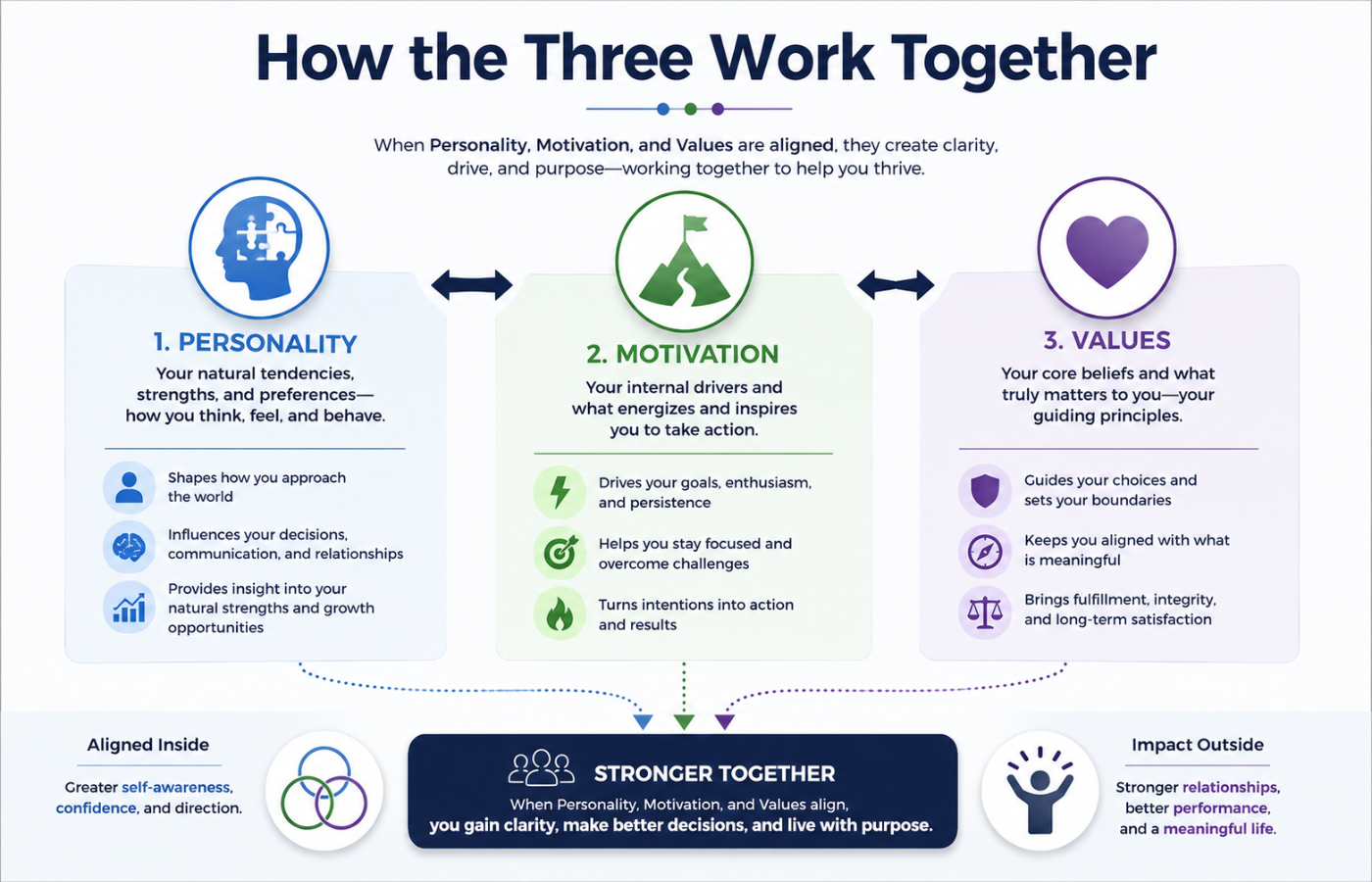
AEO, GEO, and LLMO are not separate marketing channels. They form a layered system :
LLMO sits at the core → It shapes how AI models understand your brand, entities, and expertise. If the model has a confused or incomplete picture of you, it cannot cite you confidently .
GEO builds on that → Once the model understands you, GEO determines whether generative engines select you as a source for AI Overviews and summaries. Depth, citations, and topical authority drive this layer .
AEO sits at the top → It ensures that when an AI engine extracts an answer, your content is structured clearly enough to be quoted directly. Clean headers, FAQs, and definitional content support this layer .
LLMO → GEO → AEO → User Visibility
This is the modern visibility architecture .
Do You Need All Three?
Not every business needs the same starting point :
-
Start with AEO if you rely on capturing direct, question-based searches (local services, product-led brands, quick-answer visibility).
-
Start with GEO if you publish long-form content, educational resources, or operate in B2B/SaaS where credibility matters.
-
Start with LLMO if you invest in original research, thought leadership, or want AI tools to mention your brand in conversational responses.
The Bottom Line
Want to master AEO, GEO, and LLMO — and ensure your content gets discovered everywhere your customers search and ask questions?
Get in touch with Orbitix today.