







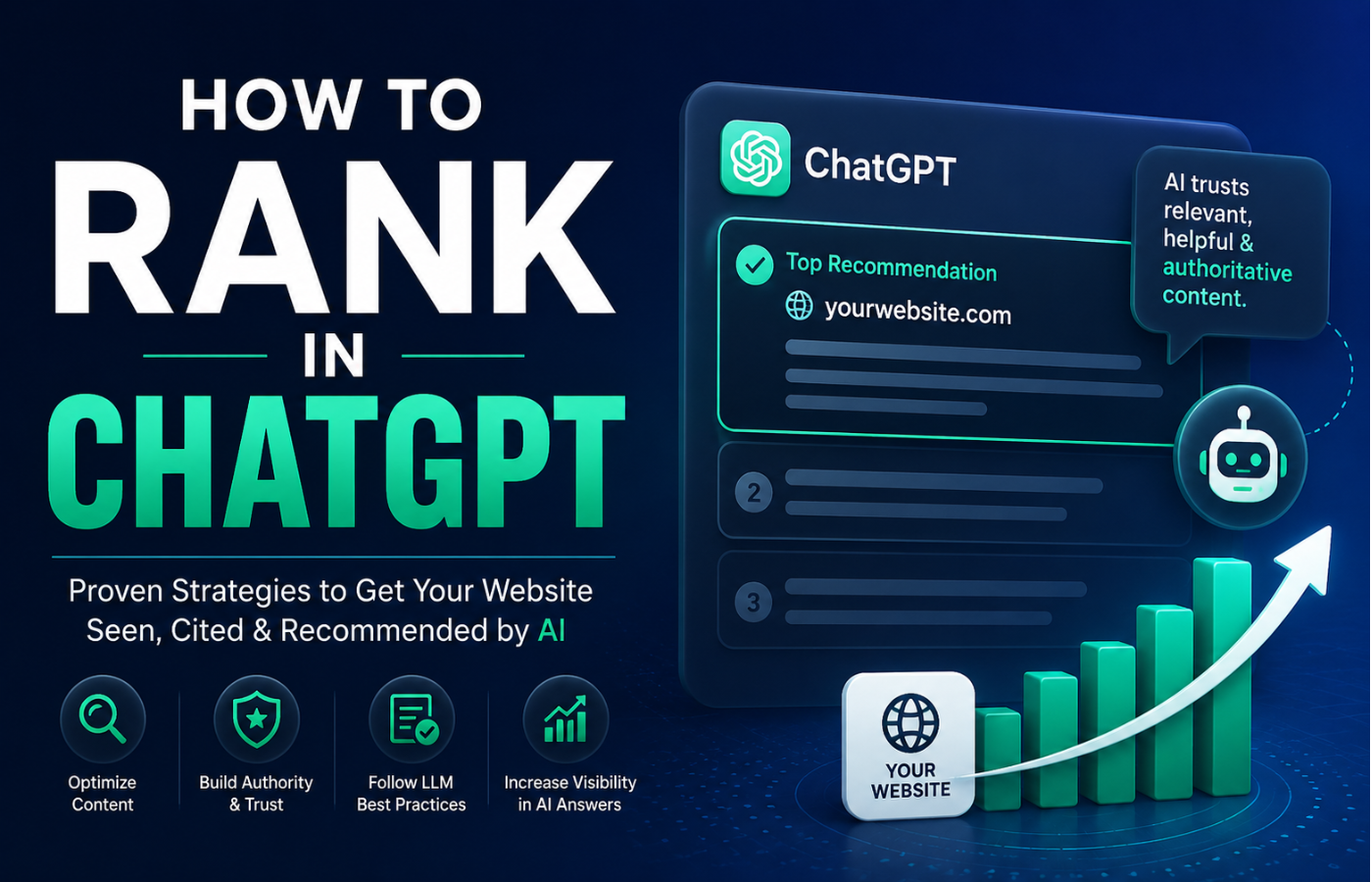
How to Rank in ChatGPT Without Traditional Search Rankings
How to rank in ChatGPT has become one of the most pressing questions for content creators, marketers, and business owners in 2026. Unlike Google or Bing, where you optimize for algorithms that crawl and index web pages, ChatGPT operates on a different paradigm—one that prioritizes relevance, context, and conversational value over backlinks and domain authority. If you’re wondering how to rank in ChatGPT without chasing traditional SEO metrics, you’re not alone. The shift toward AI-driven discovery is also reshaping the role of content marketing in SEO, requiring brands to focus on creating authoritative, user-centric content that AI systems can understand and trust. Your content now needs to be “found” not by bots crawling the web, but by large language models (LLMs) that synthesize information on demand.
In this guide, we’ll break down exactly what it takes to earn visibility inside ChatGPT’s responses, why traditional ranking signals no longer apply, and how you can position your brand, expertise, or content as the go-to source when users ask AI-powered questions.
Why “Ranking” in ChatGPT Is Different (And Why That Matters)
When we talk about how to rank in ChatGPT, we’re not talking about climbing a search engine results page (SERP). There’s no PageRank, no domain authority score, and no link equity in the traditional sense. Instead, ChatGPT generates responses based on a combination of:
-
Training data (up to its knowledge cutoff, though this is evolving with real-time browsing)
-
Contextual relevance from the user’s prompt and conversation history
-
Semantic similarity between your content and the query
-
Source credibility when the model accesses external documents or retrieves information via plugins or browsing
In essence, “ranking” here means being the answer—or being heavily cited within the answer. That requires a fundamental mindset shift: you’re no longer optimizing for a robot that evaluates code; you’re optimizing for a model that evaluates meaning.
The New AEO Framework: Answer Engine Optimization
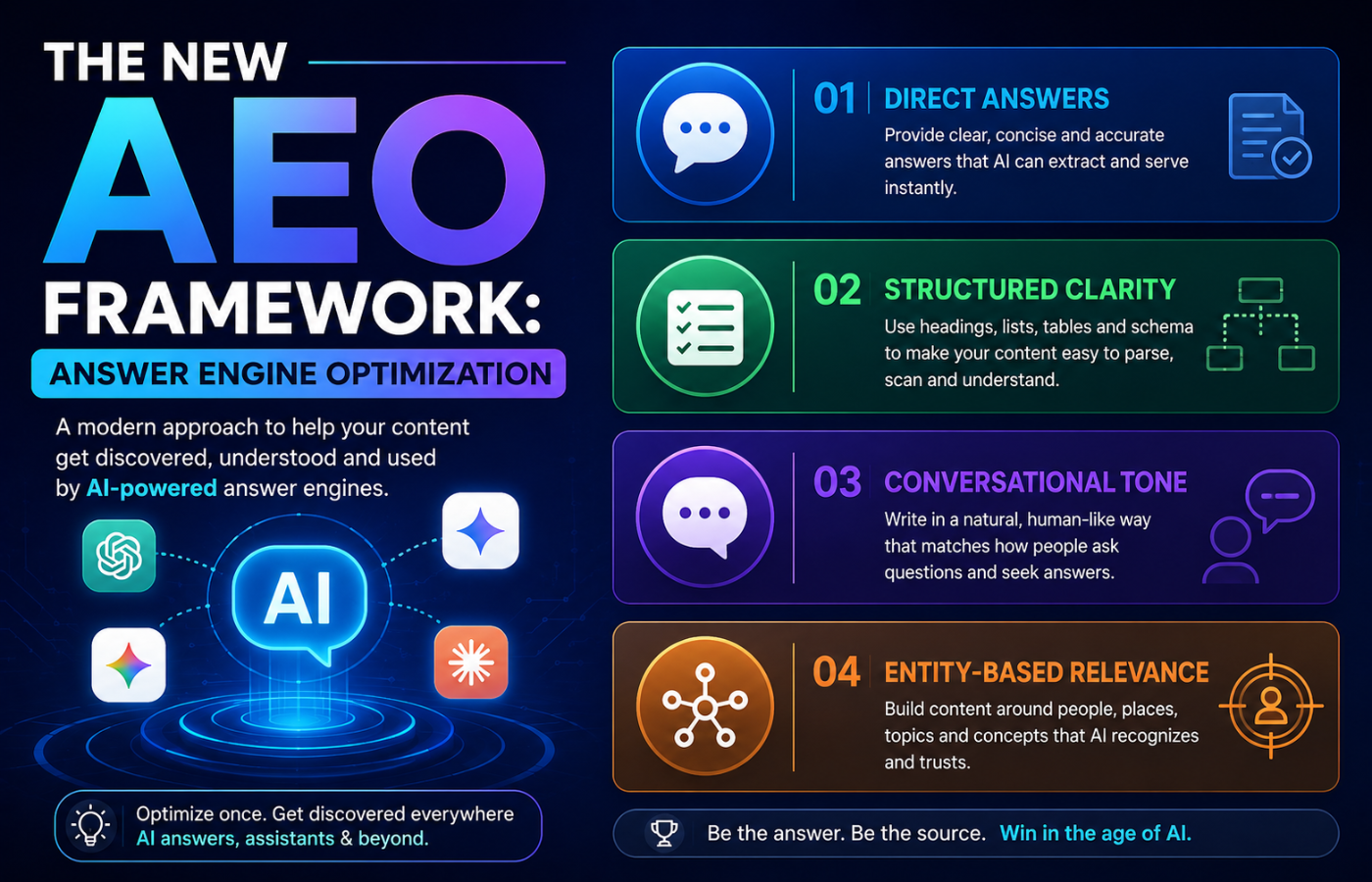
To understand how to rank in ChatGPT, you need to embrace Answer Engine Optimization (AEO). Unlike SEO, which focuses on keywords and backlinks, AEO focuses on:
-
Direct answers to specific questions
-
Structured clarity so the model can easily extract your key points
-
Conversational tone that matches how people naturally ask questions
-
Entity-based relevance (people, places, concepts, and their relationships)
ChatGPT doesn’t “rank” your page; it ranks passages, facts, and explanations. If your content clearly, concisely, and accurately answers a user’s underlying need, you have a higher probability of being featured in the response.
7 Proven Tactics to Rank in ChatGPT Without Traditional SEO
1. Write for Question-Intent, Not Keywords
Forget exact-match keyword density. Instead, map out every possible question your audience might ask about your topic. Use tools like AnswerThePublic, Reddit, or even ChatGPT itself to generate question lists. Then, create content that directly answers those questions in the first few sentences.
Example:
Instead of writing “Best CRM software features,” write “What are the most important CRM features for a small business in 2026?” and answer it immediately.
2. Use Clear, Hierarchical Headers
ChatGPT’s underlying architecture (based on transformers) pays close attention to heading structures. Use H1, H2, and H3 tags to break your content into logical, scannable sections. Each header should be a question or a clear topic statement.
Pro tip: Include the exact keyword how to rank in ChatGPT in at least one H2 heading (like we did below), because it signals to the model that this section is a direct response to that query.
3. Prioritize the “First-Paragraph Principle”
AI models often give more weight to the opening of your content. That’s why the very first sentence of your article should answer the core query. For instance, if someone asks “How to rank in ChatGPT,” your opening line should not be fluff—it should be the thesis.
Example: “To rank in ChatGPT, you need to structure your content as a direct answer to a user’s question, using clear headings, concise paragraphs, and verifiable facts—not backlinks or keyword density.”
4. Cite Sources and Data
ChatGPT’s browsing and retrieval-augmented generation (RAG) features increasingly pull from external documents. When you cite reputable sources, studies, or statistics, you increase the likelihood that the model will reference your content as an authoritative source.
Action: Always link to primary research, government data, or well-known industry reports. Even if ChatGPT doesn’t click the link, the presence of cited sources in your text improves trustworthiness in the model’s weightings.
5. Structure Content in Bullet Points and Tables
LLMs love structured data. Bullet points, numbered lists, and comparison tables make it easy for the model to extract discrete facts. If you’re listing steps, features, or pros/cons, use bulleted lists rather than dense paragraphs.
6. Optimize for Follow-Up Questions
ChatGPT responses often lead to follow-up prompts. Anticipate those by including “People also ask” sections, related FAQs, or “Next steps” at the end of your content. The more relevant context you provide, the more likely the model will return to your content for deeper dives.
7. Get Cited in Other AI-Trained Content
This is the new “backlink.” When other reputable sites, newsletters, or AI-generated summaries reference your work, ChatGPT’s training data (or real-time retrieval) may pick up those mentions. Guest post on high-authority platforms, contribute to industry roundups, and ensure your brand name is consistently spelled and described.
How to Rank in ChatGPT: A Real-World Example
Let’s say you run a SaaS company that offers project management software. Instead of writing a generic blog post titled “Project Management Tips,” you create a detailed guide called:
“How to Choose Project Management Software for Remote Teams in 2026”
Inside, you include:
-
A 5-step decision framework (numbered list)
-
A comparison table of 6 tools (including yours)
-
Direct answers to “What features matter most?” and “How much does it cost?”
-
Customer testimonials with real numbers (e.g., “We reduced meeting time by 40%”)
When a user asks ChatGPT, “What’s the best project management tool for remote teams?”, the model will scan content like yours. If your guide is clear, data-rich, and directly answers that question, you’ll likely appear in the response—not as a link, but as a quoted or paraphrased source.
Why Traditional SEO Metrics No Longer Guarantee Visibility
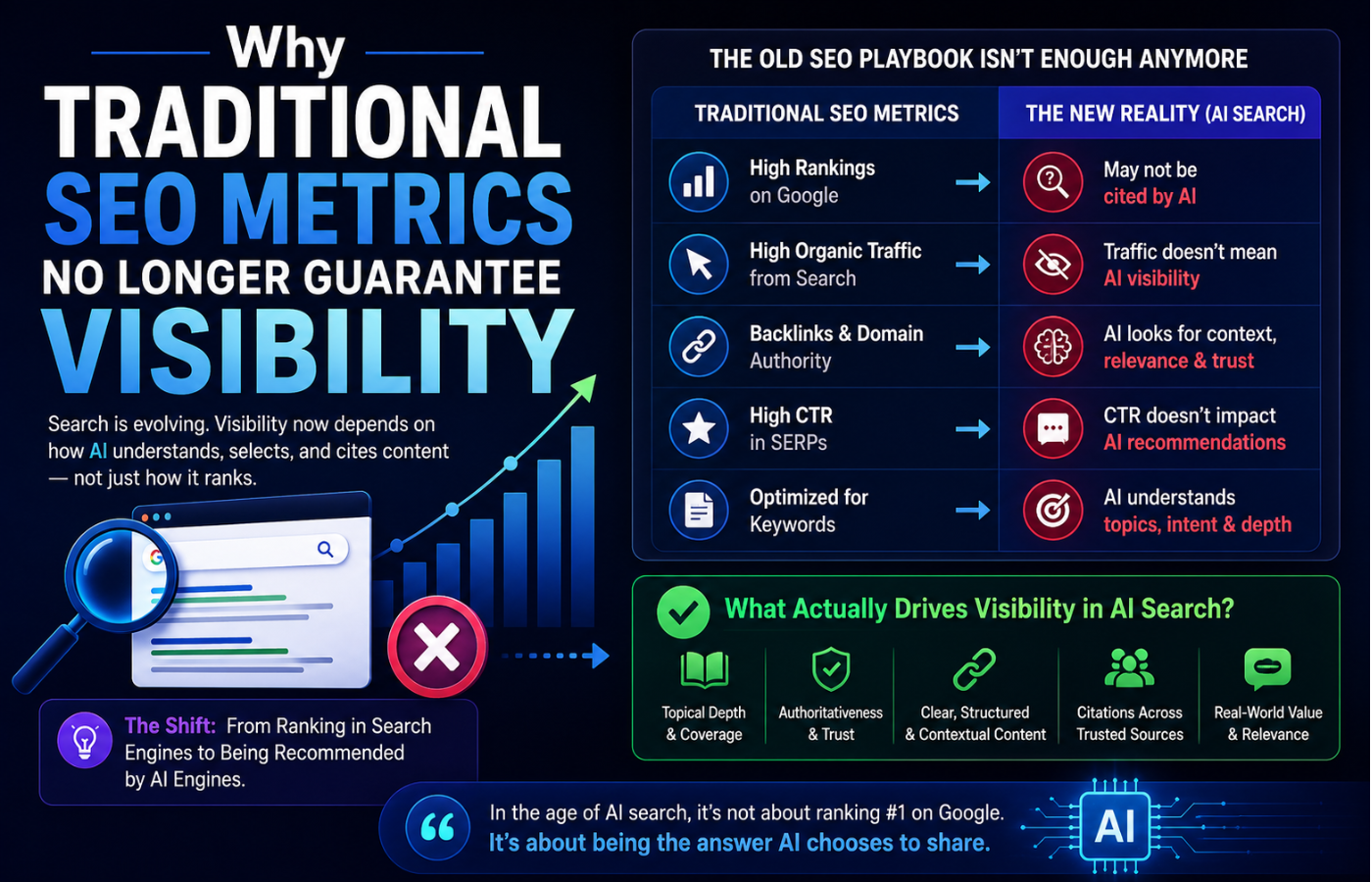
Let’s be blunt: high Domain Authority, thousands of backlinks, and perfect meta descriptions won’t help you how to rank in ChatGPT. Why? Because:
-
ChatGPT doesn’t crawl the live web by default (unless browsing is enabled)
-
It doesn’t use PageRank or Moz DA
-
It values semantic completeness over popularity
-
It synthesizes information from multiple sources, not just the top SERP results
That means a brand-new blog with 10 visitors can outrank an established media site if its content is more concise, more directly answers the prompt, and uses clearer structure.The Future of AI Ranking: What’s Next?
As of 2026, OpenAI has introduced deeper retrieval capabilities, personalized memory, and plugin ecosystems. Soon, how to rank in ChatGPT will also involve:
-
Optimizing for voice search (since many use ChatGPT via voice)
-
Structuring data in JSON-LD for better machine readability
-
Creating interactive content (quizzes, calculators) that can be called via APIs
-
Building a knowledge graph around your brand so the model understands your entity relationships
The winners in this new era won’t be the ones with the most links—they’ll be the ones with the most clarity.
Common Mistakes to Avoid
-
Keyword stuffing: ChatGPT doesn’t count keyword frequency; it measures relevance.
-
Overly long paragraphs: Break them down. The model processes shorter units better.
-
Vague claims: Instead of “our software is great,” say “our software reduces onboarding time by 2 hours per week.”
-
Ignoring user intent: Always ask, “What is the user really trying to solve?”
Conclusion: From Ranking to Being the Answer
Learning how to rank in ChatGPT isn’t about gaming a system—it’s about becoming the most useful, accurate, and clear source of information in your niche. This is especially important for industries such as finance, where effective SEO for Financial Websites now extends beyond traditional search engines and into AI-powered platforms. Traditional SEO isn’t dead, but it’s no longer the only game in town. By adopting AEO principles, structuring your content for conversational AI, and prioritizing direct answers, you can ensure that when users ask ChatGPT a question, your expertise is front and center.
Start today: Pick one piece of content, rewrite its introduction to answer a specific question, add a comparison table, and include a cited statistic. Then ask ChatGPT itself—”Based on this content, what would you answer if someone asked [your target question]?”—and iterate until you see your name in the response.
That’s the new ranking. And it’s entirely within your control.