







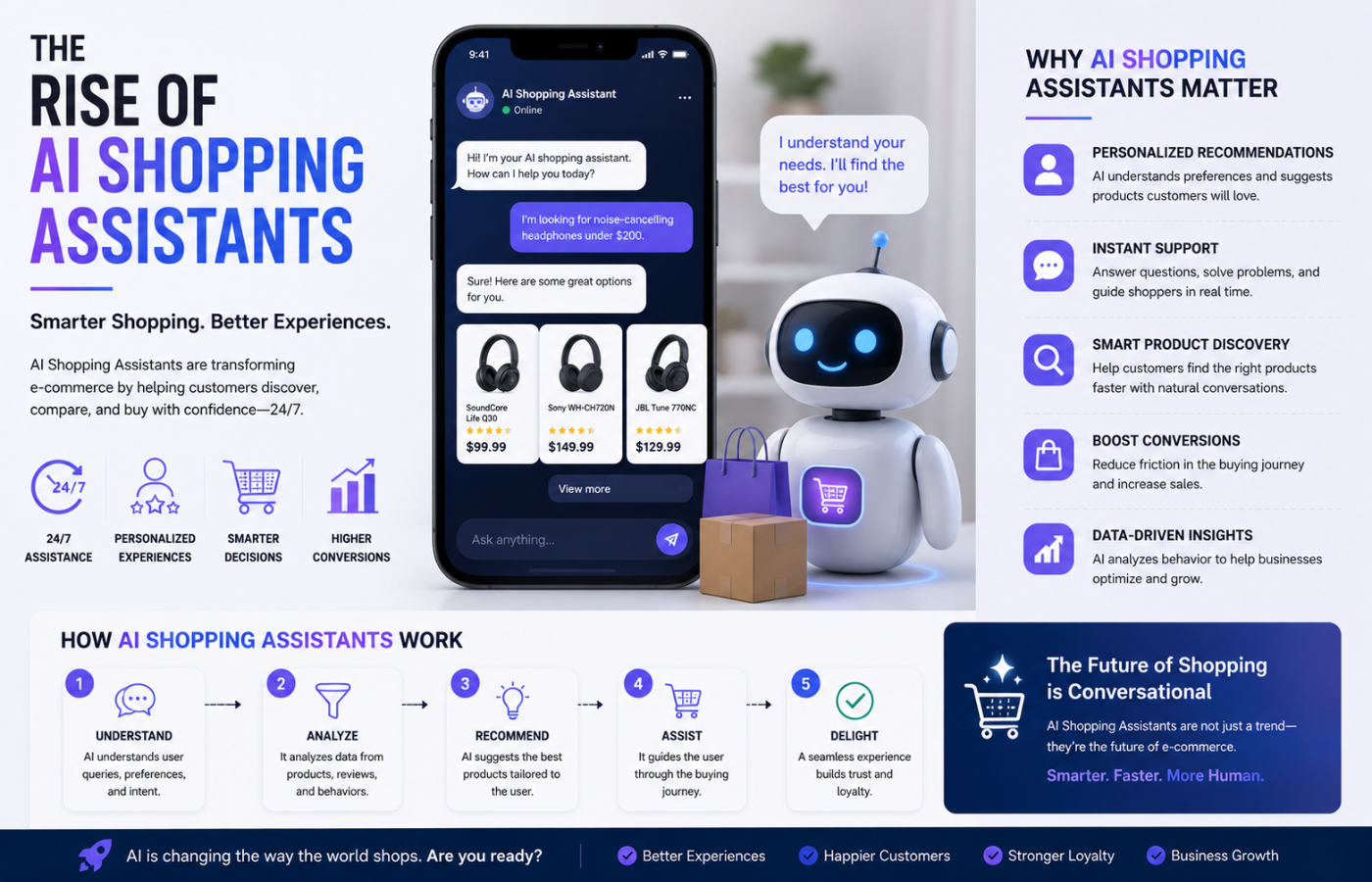
The Rise of AI Shopping Assistants: What Businesses Need to Know
Why AI Shopping Assistants Are Transforming E-Commerce
The shift is driven by a simple consumer reality: choice overload. With thousands of products available, shoppers increasingly turn to AI for help. Recent data shows that 39% of US consumers had used AI for online shopping by late 2025, with another 14% planning to do so soon . The impact is explosive—AI-driven referral traffic to US retail sites grew by 4,700% year over year .
What the Rise of AI Shopping Assistants Means for Your Business
The rise of AI shopping assistants creates both opportunities and risks across three critical areas:
1. Discovery Is Shifting to AI Agents
Traditional search is no longer the primary gateway. Consumers now start shopping journeys on ChatGPT, Google’s Gemini, Perplexity, and Amazon Rufus . Google’s AI Mode allows shoppers to describe needs in natural language—”a breathable summer dress for a beach wedding”—and the AI runs simultaneous searches across 50+ billion product listings .
What this means: If your product data isn’t structured for AI readability, you’re invisible. Agents query structured feeds, not websites. Keyword-rich page copy does almost nothing for agent discoverability .
2. Amazon Is Rewriting the Rules
Amazon’s Rufus had over 250 million users in 2025, driving approximately $12 billion in incremental annualised sales. Shoppers who used Rufus were 60% more likely to complete a purchase . Through its “Buy for Me” feature, Amazon now lets customers buy from third-party brand sites without leaving the Amazon interface—the agent navigates, adds to cart, and completes checkout on the customer’s behalf .
What this means: Amazon is positioning itself as the single location for the full journey from research to transaction. Third-party retailers risk being reduced to a supply chain role .
3. Agentic Commerce Is Going Mainstream
AI shopping agents now autonomously discover, compare, and purchase products. Google’s Agentic Checkout, OpenAI’s Instant Checkout, and Amazon’s Auto Buy feature allow one-tap transactions . The Universal Commerce Protocol (UCP), backed by Shopify, Google, Amazon, and over 20 global partners, provides an open standard for agent-to-merchant transactions .
What this means: Gartner forecasts a 25% decline in global search traffic this year as conversational AI replaces traditional search behaviour .
Practical Steps to Prepare Your Business
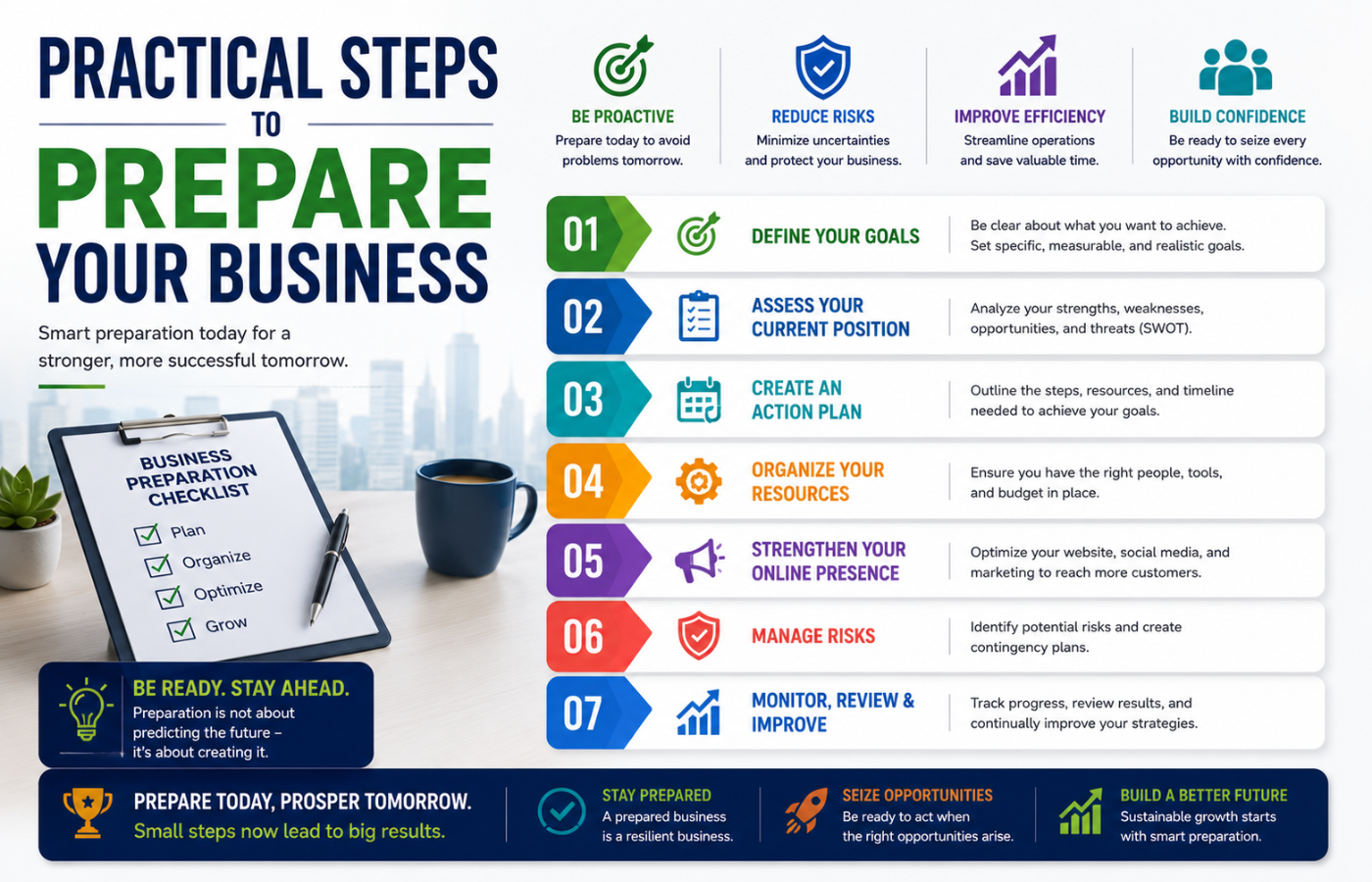
| Priority | Action |
|---|---|
| Structured data | Implement complete product schema (JSON-LD) with all attributes—price, availability, SKU, brand, reviews |
| Pricing & inventory freshness | Ensure real-time accuracy across feeds; stale data is a trust signal failure |
| Agent-accessible APIs | Expose clean, documented product APIs; implement llms.txt to guide AI systems |
| Generative Engine Optimisation (GEO) | Optimise for AI extraction, not just search rankings—structured metadata, full-sentence descriptions, indexable reviews |
| Monitor protocol adoption | UCP and related standards will determine how agents access catalogs |
Conclusion: The AI Agent Is the New Storefront
The rise of AI shopping assistants represents a fundamental shift from search to conversation, from keyword optimisation to structured data, and from brand discovery to agent-mediated recommendation. As the AI marketing funnel evolves, retailers who invest in agentic-ready infrastructure now will build a compounding advantage as adoption accelerates. Those who wait risk becoming invisible in their own category.
Want an AI-ready e-commerce strategy that makes your products discoverable by every major shopping agent—not just search engines?
Get in touch with Orbitix today.