





The Impact of Web Page Development Services on Website Visibility
Why Visibility Starts With Development, Not Just Content
Content is king, but development is the throne. You can write the most helpful blog post in your industry, but if your web page has broken schema markup, slow server response times, or JavaScript that hides your text from Googlebot, no one will ever read it. Search engines need to crawl, render, index, and understand your pages efficiently. Poor development creates barriers at every step. Conversely, expert development removes those barriers, making it effortless for Google to discover, interpret, and rank your content. Visibility is not magic — it is engineering.
How Professional Web Page Development Services Boost Visibility
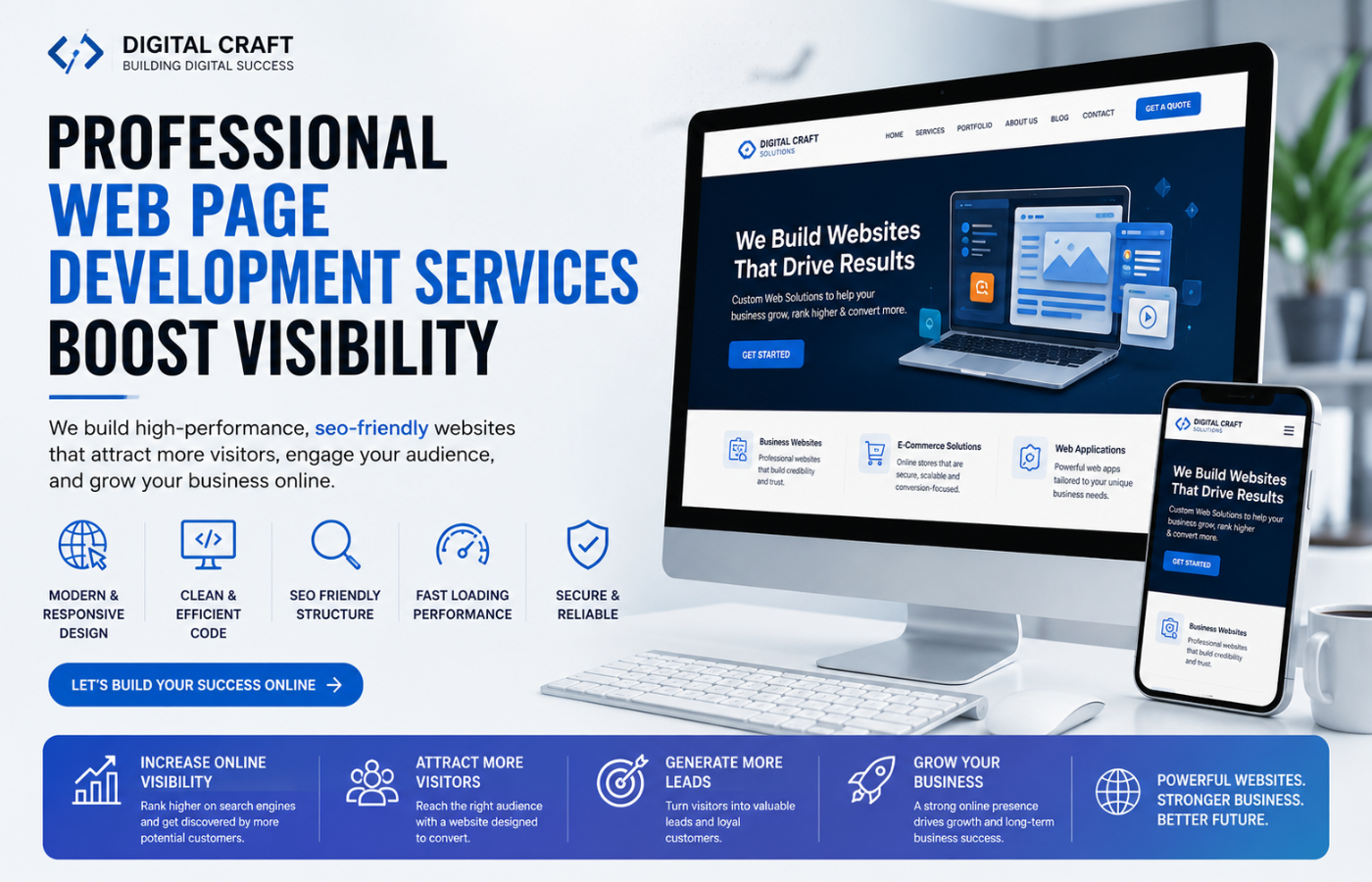
Investing in expert web page development services directly impacts your search visibility through several technical and structural advantages:
1. Crawlability & Indexation Optimisation
If search engines cannot crawl your pages, they cannot rank them. Professional development ensures:
-
Clean, logical URL structures (
/products/mens-shoesnot/p=123&cat=45&ref=sessionid) -
XML sitemaps that dynamically update when you add or remove pages
-
Robots.txt configuration that guides Googlebot to important pages and blocks low-value ones (admin pages, duplicate filters, internal search results)
-
Canonical tags that prevent duplicate content penalties
-
No orphan pages (every page has at least one internal link from another crawlable page)
2. Page Speed as a Ranking Factor
Google has confirmed that page speed is a ranking factor for both desktop and mobile searches. Professional web page development services deliver:
-
Optimised Core Web Vitals: Largest Contentful Paint (LCP) under 2.5 seconds, First Input Delay (FID) under 100ms, Cumulative Layout Shift (CLS) under 0.1
-
Efficient critical rendering path (only load what is needed for above-the-fold content)
-
Code minification (removing unnecessary characters from CSS, JavaScript, and HTML)
-
Image optimisation (next-gen formats, responsive images, lazy loading)
-
Server-side caching (TTFB under 200ms)
3. Mobile-First Indexing Readiness
Google now predominantly uses the mobile version of your site for indexing and ranking. Development services ensure:
-
Responsive design (one website that adapts to all screen sizes, not a separate mobile subdomain)
-
Viewport configuration that tells browsers how to scale content
-
Touch-friendly elements (buttons and links at least 44×44 pixels)
-
Readable font sizes (no pinching or zooming required)
-
No mobile-only interstitials that block content (pop-ups that Google penalises)
4. Structured Data & Schema Markup
Schema markup helps Google understand your content and display rich results (stars, prices, events, FAQs). Professional development implements:
-
JSON-LD structured data (Google’s preferred format, placed in the
<head>) -
Page-specific schema:
Article,Product,FAQ,LocalBusiness,Review,BreadcrumbList,Organization -
Validated markup (tested with Google’s Rich Results Test)
-
Dynamic schema for e-commerce or database-driven sites
Rich results can increase click-through rates by 30-40% — directly improving visibility without moving up in rankings.
5. JavaScript SEO (For Modern Frameworks)
If your site uses React, Vue, Angular, or similar frameworks, you face unique visibility challenges. Professional web page development services include:
-
Server-side rendering (SSR) or static site generation (SSG) so Googlebot receives fully rendered HTML
-
Progressive enhancement (critical content available without JavaScript)
-
Proper use of
<noscript>tags as a fallback -
Avoiding common JS pitfalls: infinite scroll without crawlable pagination, client-side routing without History API, content hidden behind user interactions
6. Accessibility & Semantic HTML
Accessible websites often rank better because they use clean, logical HTML that Googlebot easily parses. Development services deliver:
-
Semantic heading structure (one H1 per page, hierarchical H2-H6)
-
Descriptive alt text for all images
-
ARIA labels for interactive elements
-
Keyboard-navigable menus (good for both accessibility and crawlers)
-
Logical source order (content appears in a meaningful sequence in the HTML, even if CSS rearranges it visually)
7. Internal Linking Architecture
How you link your own pages together tells Google which content is important. Professional development creates:
-
Contextual internal links within body content (not just sidebar or footer links)
-
Breadcrumb navigation (improves user experience and creates clear site hierarchy)
-
Related posts or products (automatically generated based on tags or categories)
-
Strategic link depth (important pages within 3 clicks of homepage)
8. Security (HTTPS) as a Ranking Signal
Google has confirmed that HTTPS is a lightweight ranking factor. Development services ensure:
-
SSL/TLS certificates properly installed and configured
-
Automatic HTTP to HTTPS redirects (301, not 302)
-
Mixed content fixes (no insecure images or scripts loading over HTTP)
-
HSTS headers (tells browsers to always use HTTPS)
The Technical Visibility Checklist
| Development Element | Visibility Impact | Warning Sign |
|---|---|---|
| Crawl budget | Google wastes time on low-value pages | Thousands of pages indexed but zero traffic |
| Core Web Vitals | Direct ranking factor for mobile | LCP > 4 seconds in Search Console |
| Mobile responsiveness | Google ranks mobile version | Mobile usability errors in Search Console |
| Schema markup | Rich snippets in SERPs | No rich results for products or reviews |
| JS rendering | Hidden content | “Page indexed but not rendered” warnings |
| Internal linking | Orphan pages never discovered | Pages with zero internal links |
| HTTPS | Trust & small ranking boost | “Not secure” warning in browser |
Common Development Mistakes That Kill Visibility
-
Reliance on JavaScript for critical content (Googlebot may see an empty page)
-
Blocking CSS or JS files in robots.txt (Google cannot render your page properly)
-
Using session IDs or tracking parameters in URLs (creates infinite duplicate URLs)
-
No XML sitemap (Google discovers pages slower)
-
Broken internal links (wastes crawl budget and frustrates users)
-
Non-responsive images (serve desktop-sized images to mobile users = slow load times)
-
Missing or incorrect canonical tags (duplicate content penalties)
Measuring Visibility Improvements
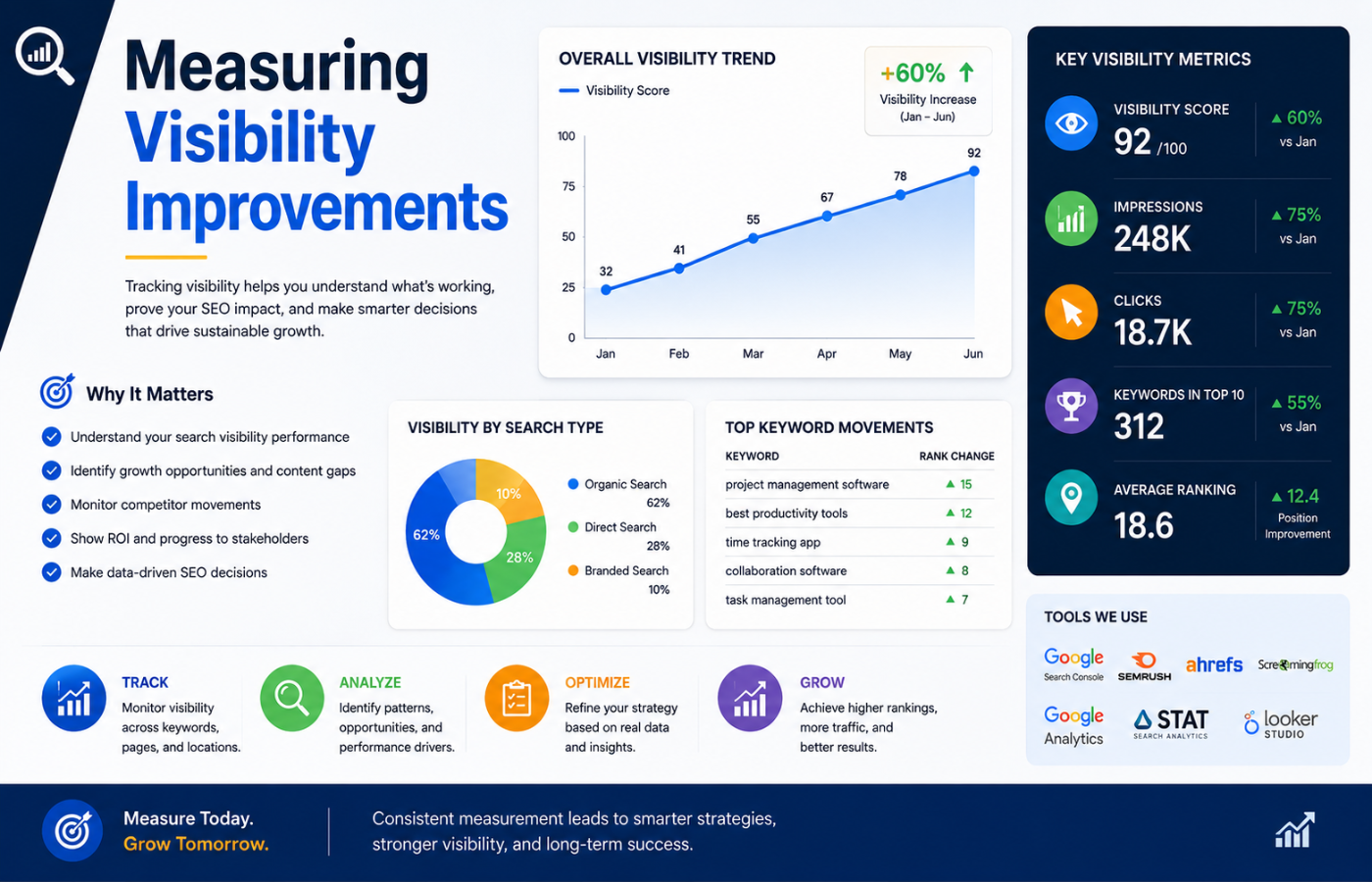
Track these metrics after investing in web page development services:
-
Indexed pages ratio: Pages submitted vs pages indexed (aim for 80%+)
-
Crawl stats in Google Search Console: Pages crawled per day, crawl time, response codes
-
Core Web Vitals pass rate: Percentage of URLs with “good” LCP, FID, CLS
-
Mobile usability errors: Should be zero
-
Rich result impressions: Search Console > Performance > Search Appearance
-
Organic click-through rate (CTR): Improved rich snippets often lift CTR by 10-40%
Conclusion: Visibility Is Engineered, Not Wished For
Want a technically flawless website that search engines love to crawl, index, and rank — starting from the very first line of code?
Get in touch with Orbitix today.