







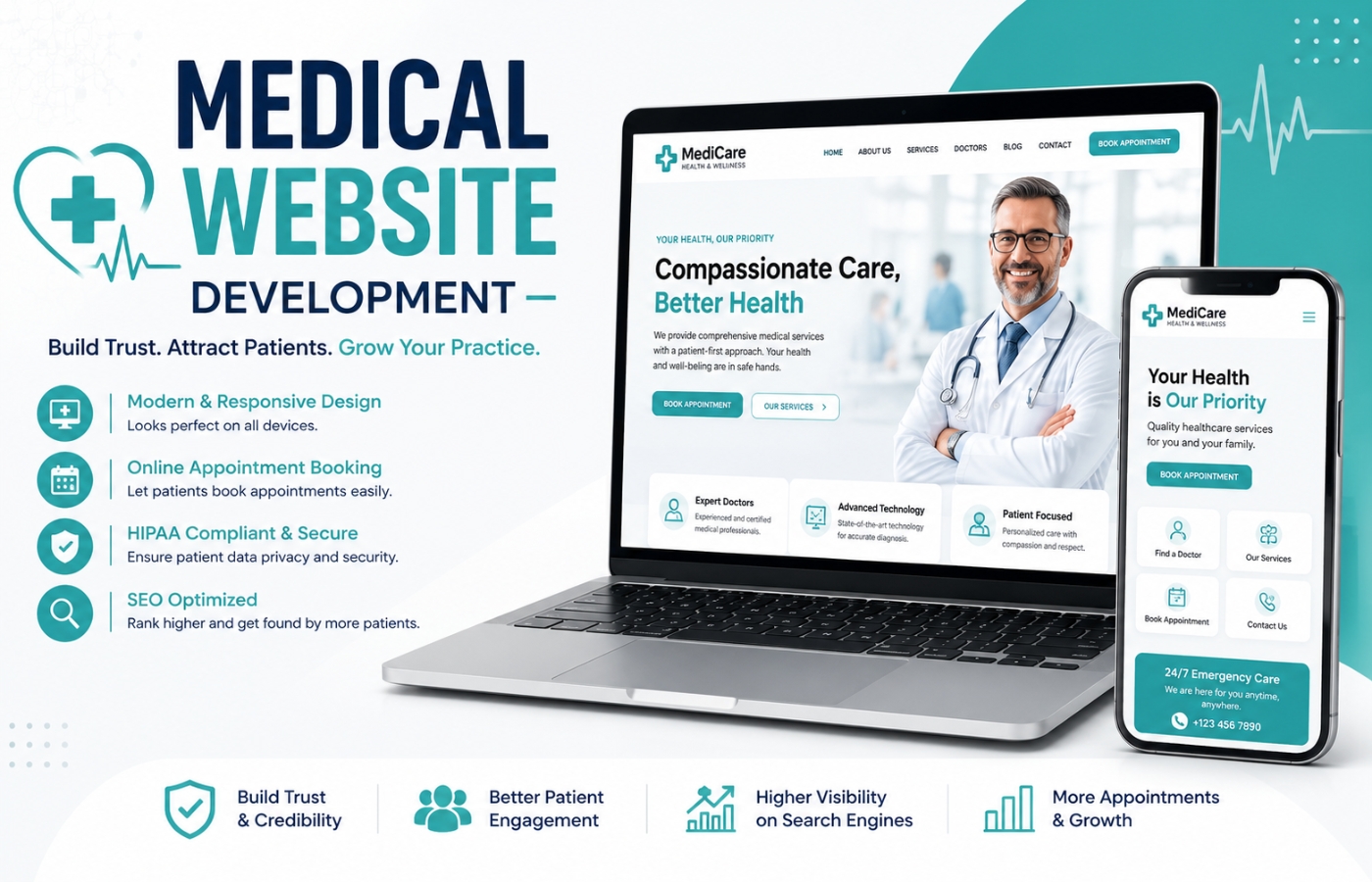
How Medical Website Development Helps Attract More Patients Online
Medical website development is no longer a luxury for healthcare providers — it is a necessity. When potential patients search for a doctor, clinic, or specialist online, their first interaction is almost always with your website. The same principle applies to other professional industries, including website development for law firms, where a strong online presence helps build trust and attract clients. If your site is slow, confusing, or lacks essential trust signals, visitors will simply click back and choose a competitor. A strategic approach to medical website development ensures that your practice appears credible, accessible, and patient-focused from the very first click, helping you attract and retain more patients in an increasingly digital healthcare landscape.
Why Patient Trust Begins With Your Website
Healthcare decisions are deeply personal. Unlike retail purchases, patients are trusting you with their well-being. Your website must immediately answer three critical questions: Is this provider legitimate? Do they understand my needs? Can I easily book an appointment? Modern medical websites use clean design, fast load times, and clear calls-to-action to address these concerns before a patient even picks up the phone.
Key Features of Effective Medical Website Development
What separates a high-performing medical site from an average one? Strategic medical website development focuses on features that directly drive patient acquisition:
-
Appointment Scheduling Integration: Patients expect to book online 24/7. A simple, secure form or real-time calendar reduces friction and captures leads after hours.
-
HIPAA & GDPR Compliance: Displaying security badges and privacy assurances builds immediate trust. Patients need to know their health data is safe.
-
Mobile-Optimised Design: Over 70% of health-related searches happen on smartphones. If your site isn’t thumb-friendly, patients will assume you are outdated.
-
Clear Service Pages: Each treatment or specialty should have a dedicated page with easy-to-understand language, not medical jargon.
-
Patient Testimonials & Video Reviews: Real stories from real patients are the most powerful trust signal in healthcare.
The Role of Local SEO in Medical Website Development
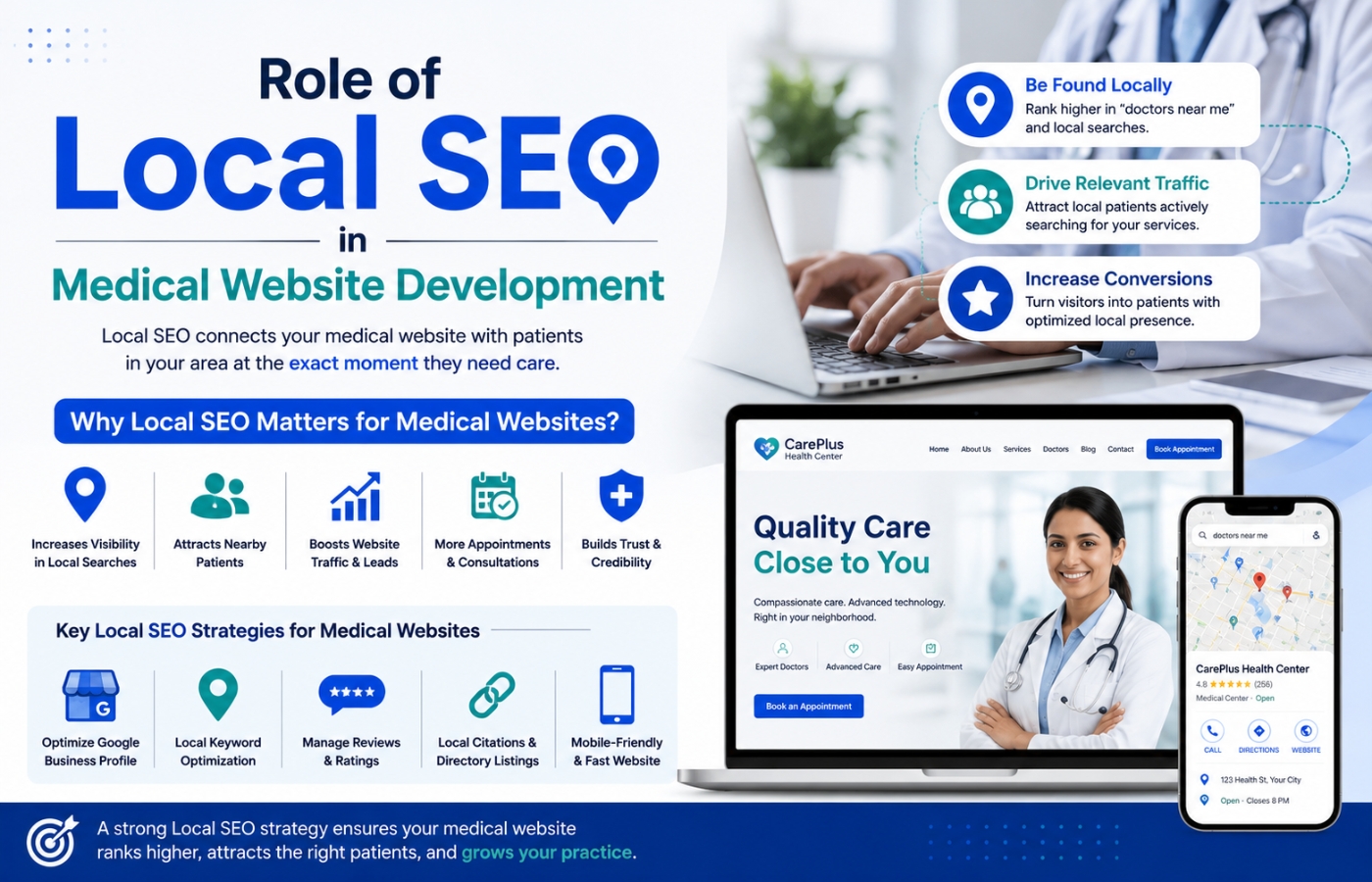
Even the most beautiful website won’t attract patients if nobody can find it. Medical website development must include local SEO as a core strategy, incorporating local search optimization techniques such as claiming your Google Business Profile, embedding accurate maps, using location-specific keywords (e.g., “pediatrician in [city]”), and ensuring your name, address, and phone number (NAP) are consistent across the web. When a patient searches for “urgent care near me,” your site needs to be the first credible option. Effective local SEO helps healthcare providers improve visibility in local search results, attract nearby patients, and build trust within their communities.
Speed and Accessibility: Non-Negotiable for Healthcare
A one-second delay in page load time can reduce conversions by 20%. For medical websites, slow speed signals neglect. Additionally, accessibility (WCAG compliance) ensures that patients with disabilities — including visual or motor impairments — can navigate your site. This not only expands your potential patient base but also demonstrates genuine care for all members of your community.
Building Authority Through Educational Content
Patients today research symptoms, treatments, and providers before booking. A medical website that offers blog posts, FAQs, and condition guides positions your practice as an authority. When you answer patient questions for free, they are far more likely to choose you when they need hands-on care. This content also boosts your search rankings, creating a virtuous cycle of discovery and trust.
Conclusion: From Online Search to Exam Room
Your website is your silent referral coordinator—working every minute to reassure, inform, and convert. Strategic medical website development transforms a simple domain into a patient-generating engine. In a competitive healthcare market, the practices that invest in modern, trustworthy websites will consistently win the first appointment.
Want a modern, trustworthy medical website that turns online searchers into loyal patients?
Get in touch with Orbitix today.