





SEO in 2026: AI, Search Evolution, and the End of Traditional SEO?
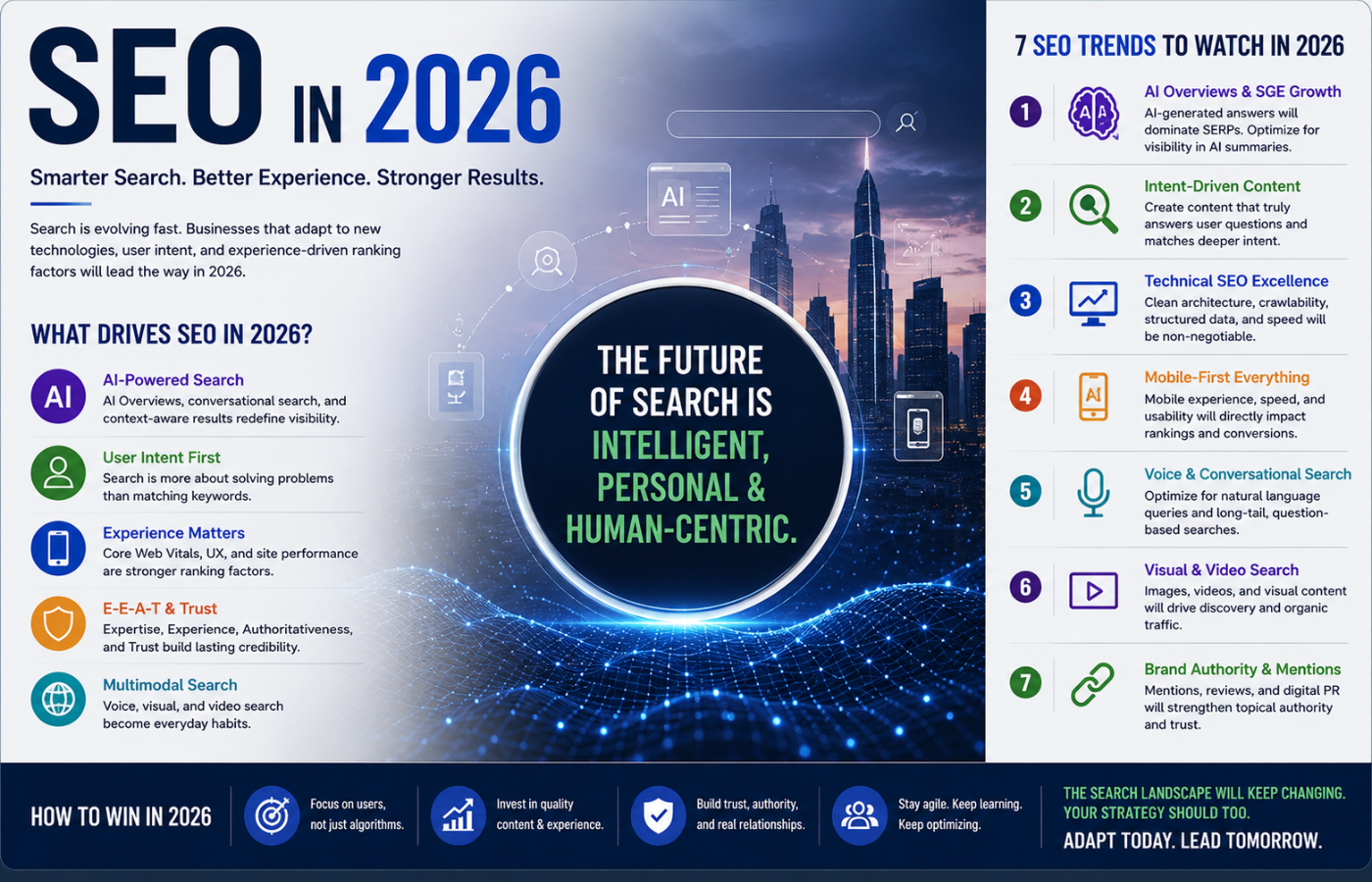
Is traditional SEO dying? That is the question dominating boardrooms and marketing teams as SEO in 2026 undergoes its most significant transformation in over a decade. The short answer is no — but the discipline is evolving into something fundamentally different, with New SEO Layers emerging to address AI-driven search experiences. Instead of obsessing over rankings, SEO in 2026 requires brands to focus on being cited within AI-generated answers. Enterprise marketing leaders surveyed in 2026 expect traditional search traffic to grow to 53% of website traffic while AI search simultaneously expands to 50%. Both channels are growing — but the rules of engagement have changed.
Why SEO in 2026 Is About Recognition, Not Rankings
Traditional SEO had a clear mandate: rank #1, get traffic, win. That model is breaking for SEO in 2026. AI Overviews now appear for nearly 13% of U.S. queries, absorbing clicks that once went to organic results. When an AI Overview appears, users click traditional links only 8% of the time compared to 15% when no AI Overview is present.
This shift is forcing a fundamental rethink. As one expert notes: “A brand can rank No. 1 for vital trophy keywords and still be invisible to AI systems if the brand behind it hasn’t established recognition and preference”. In this new landscape, SEO in 2026 is less about “how do I rank?” and more about “is my brand the preferred option in the conversation?”
The New SEO Ecosystem
The 2026 search landscape is fragmented. Users now start searches across AI platforms like ChatGPT, YouTube, Reddit, and voice assistants. SEO in 2026 is no longer Google-first; it’s platform-agnostic. Traditional SEO is projected to remain the primary source of high-intent traffic, but marketers report that 89% have already seen performance improve from AI search optimisation.
What Still Matters in 2026
While the environment has changed, SEO in 2026 still relies on fundamentals:
-
E-E-A-T: Experience, Expertise, Authority, and Trust are gatekeepers. Content with visible authors, real experience, and external validation outperforms anonymous, faceless pages.
-
Crawlability: Whether for Google or AI bots, if your site can’t be crawled, you won’t appear anywhere.
-
Structured Data: Schema markup helps AI systems extract and verify facts for synthesis.
What’s Different in 2026
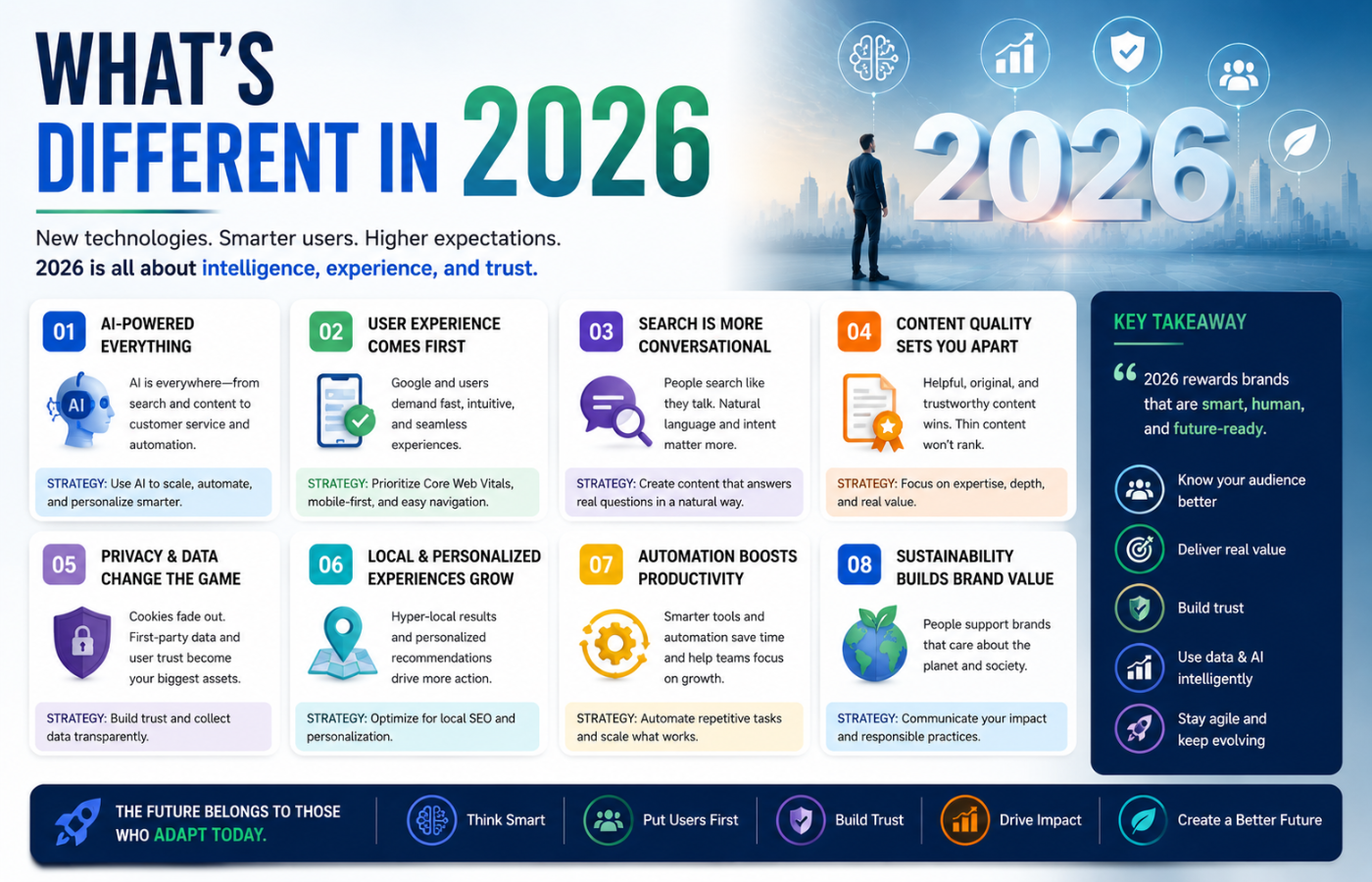
Citable Content: Original research, data, and frameworks that journalists and AI platforms want to reference matter more than keyword-optimised blog posts.
LLMs.txt: Controversial but growing, this file guides AI crawler behaviour, with adoption rising significantly in 2025.
Bot Management: Robots.txt is now a policy document for managing an array of AI crawlers like GPTBot and Claudebot.
Conclusion: The End of SEO as We Knew It
SEO in 2026 is not the end of search optimisation, but it is the end of “traditional” SEO as a rankings-only discipline. The winners will be brands that build authority, create citable assets, implement effective Local Citations SEO Strategies, structure content for AI synthesis, and maintain strong technical foundations across every platform where customers search.
Want SEO strategies for 2026 that build recognition, authority, and visibility across AI search, social platforms, and traditional results—not just chasing rankings that no longer guarantee clicks?
Get in touch with Orbitix today.