




AI Marketing Funnel Strategies for Higher Conversions in 2026
Why the Marketing Funnel Has Changed
Buyers now use AI to research and shortlist vendors before ever clicking a website link . AI Overviews in search results mean only 8% of searches result in a click when an AI summary is present, compared to 15% without one . This “zero-click” behaviour compresses the discovery-to-decision process, reducing opportunities for brands to influence buyers .
The solution isn’t to abandon the funnel—it’s to rebuild it for AI.
AI Marketing Funnel Strategies That Drive Higher Conversions
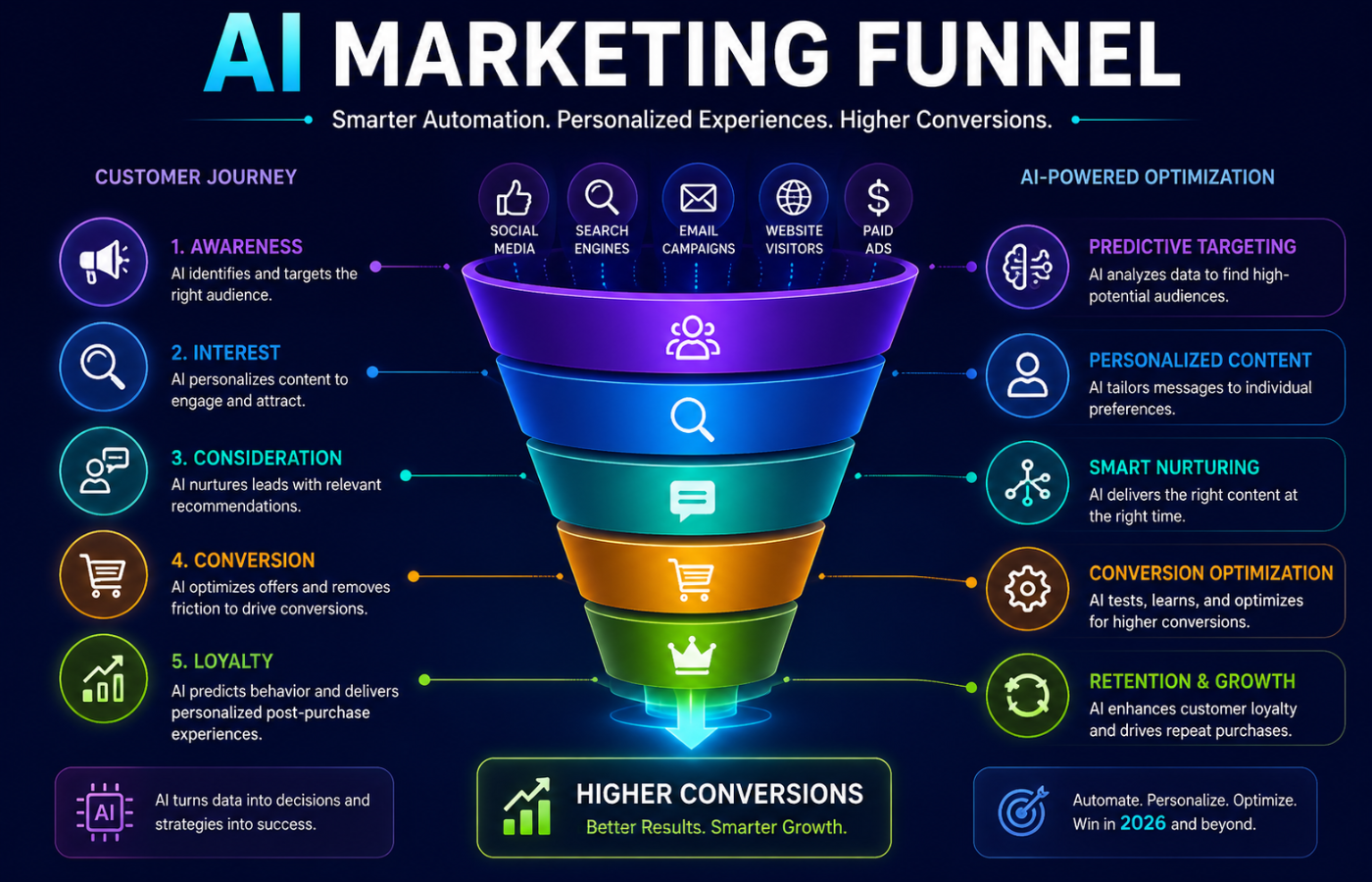
Here are proven AI marketing funnel strategies for each stage:
1. Awareness: Earn Visibility in AI Search
Traditional SEO alone won’t cut it. You need Generative Engine Optimisation (GEO) to appear in AI-generated answers .
What works:
-
Create clear, structured content with strong definitions and concise explanations so AI systems can interpret it instantly
-
Publish expert opinions, earned media, and customer reviews—LLMs favour third-party sources (over 90% of non-branded AI responses come from third-party content)
-
Use conversational, rich text (blogs and explainers) over webinars or embedded images
-
Build off-site authority through publications and external reviews
Key metric: AI visibility and citations in LLM outputs
2. Consideration: Personalise at Scale with AI
At this stage, AI turns fragmented engagement data into actionable segments .
What works:
-
Use AI-powered segmentation based on behaviour (not just demographics). A visitor who watched 80% of your demo video receives different messaging than someone who bounced after 15 seconds
-
Deploy chatbots that answer questions 24/7 and guide leads based on their specific interests
-
Implement predictive lead scoring that ranks prospects by conversion likelihood using hundreds of signals
-
Send AI-personalised follow-ups within five minutes of engagement (not the next business day)
Key metric: Engagement Quality Score (weighted score of meaningful interactions)
3. Conversion: Speed Up Decisions with Smarter Insight
AI doesn’t just improve conversion—it transforms how you optimise for it.
What works:
-
Automate A/B testing for landing pages, emails, and ad creatives—AI tests variations simultaneously and reallocates traffic to higher-performing paths
-
Use AI-powered chatbots to resolve objections, share discounts, or simplify checkout
-
Predict purchase timing and trigger personalised outreach within optimal windows
-
Implement dynamic pricing models that adjust in real time based on demand
Key metric: Conversion Rate Lift (% increase after AI-driven personalisation)
4. Retention: Predict Churn and Automate Loyalty
AI-powered retention strategies turn one-time buyers into repeat customers.
What works:
-
Use ML models to analyse interaction frequency, sentiment, and purchase intervals to flag at-risk customers
-
Trigger automated win-back offers when engagement drops (e.g., if login frequency drops 50% over 14 days)
-
Personalise upsell and cross-sell recommendations based on usage patterns
Key metric: Churn Prediction Accuracy and Customer Retention Rate
Common AI Marketing Funnel Mistakes
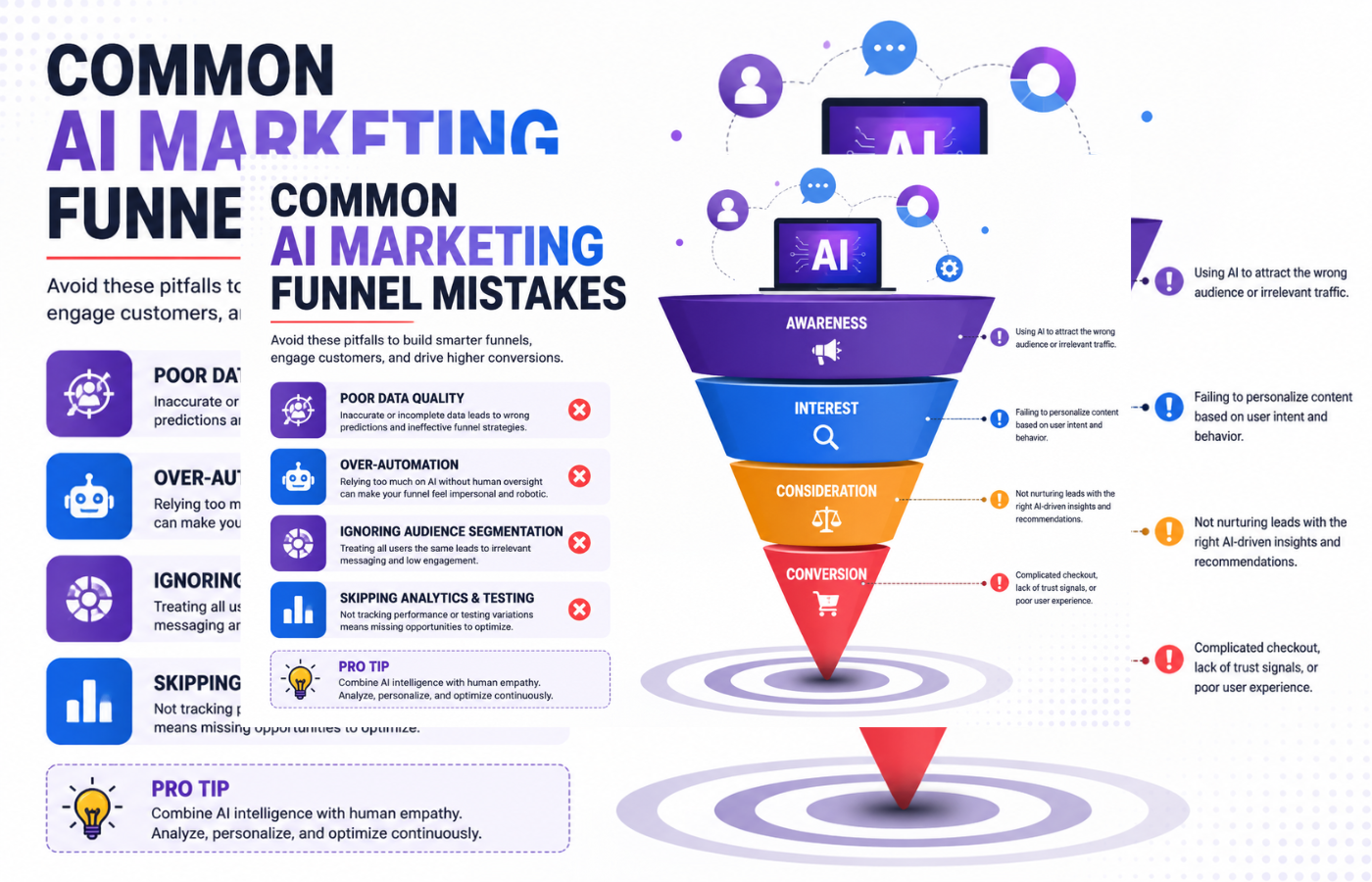
| Mistake | Why It Hurts | Fix |
|---|---|---|
| Generic email blasts without triggers | Drops engagement by 40-60% | Use AI-optimised send times and personalisation |
| Treating all leads identically | Wastes resources on low-intent prospects | Segment by engagement level |
| No AI visibility strategy | Disappear from AI-generated answers | Optimise for GEO and off-site authority |
| Ignoring zero-click behaviour | Losing leads before they reach your site | Build brand awareness through AI-friendly content |
Measuring AI Funnel Success
Traditional metrics need updating. Focus on:
-
AI referral traffic (growing ~40% monthly for many companies)
-
Conversion rate from AI-referred leads (up to 6x higher than Google referrals)
-
AI visibility and citations in LLM outputs
-
Lead qualification speed (time from engagement to CRM qualification)
Conclusion: Build an AI-Ready Growth Engine
Want an AI-powered marketing funnel that adapts to zero-click search, personalises at scale, and turns AI referrals into your fastest-growing channel?
Get in touch with Orbitix today.