






The Importance of Backlinks in SEO: A Complete Guide
Why Backlinks Matter
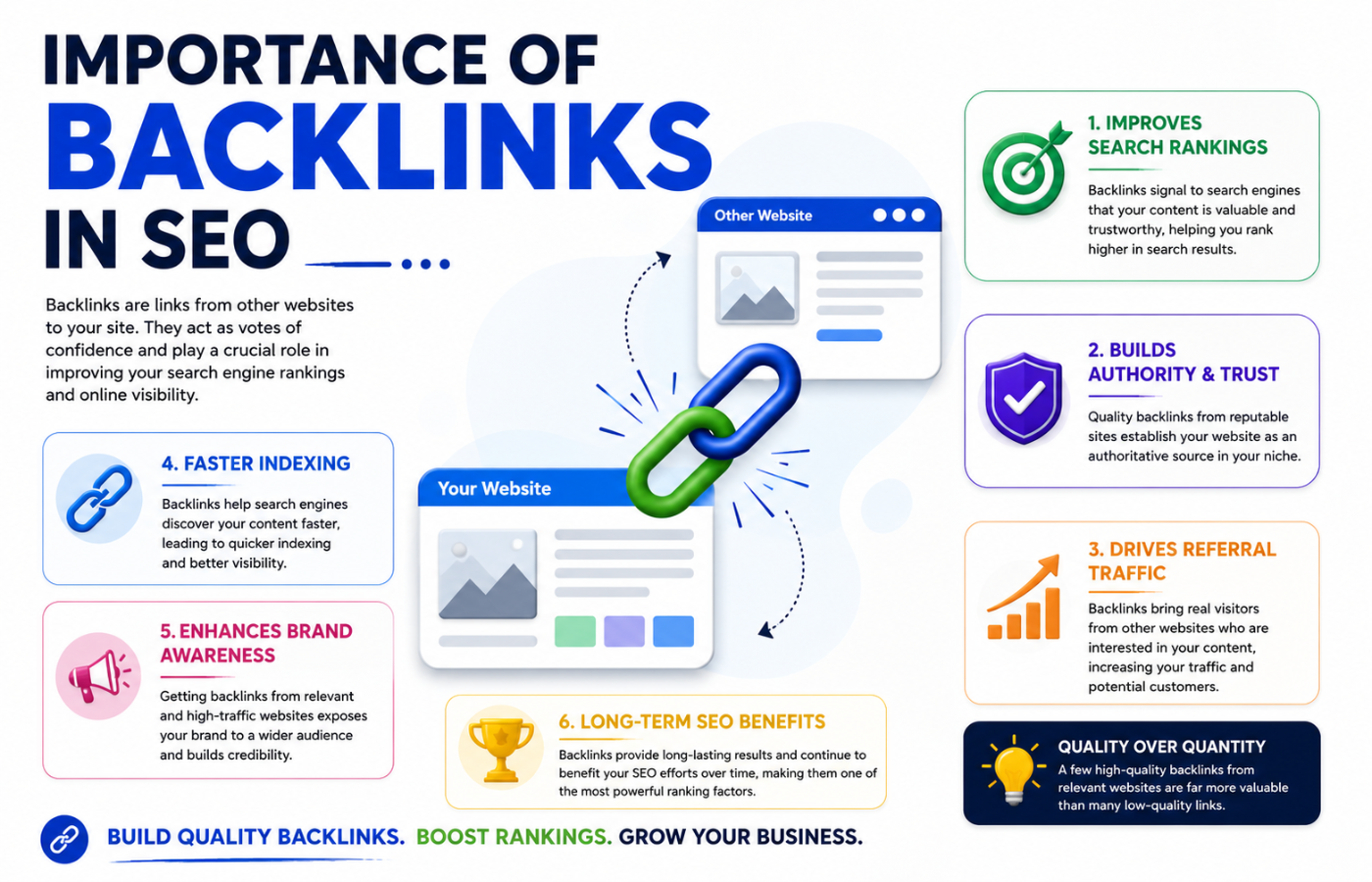
Search engines view backlinks as endorsements. When a reputable site links to yours, it tells Google: “This content is trustworthy enough to reference.” High-quality backlinks correlate strongly with higher rankings, more organic traffic, and increased domain authority.
The Importance of Backlinks in SEO: Key Factors
1. Backlinks Signal Trust and Authority
Google’s algorithm uses backlinks as a primary measure of a website’s authority. Sites with more high-quality backlinks generally rank higher because they are seen as more trustworthy sources of information. Think of each backlink as a “vote” — but not all votes are equal.
2. Quality Matters More Than Quantity
A single backlink from a high-authority site (like a major news outlet or industry leader) is worth more than dozens of low-quality directory links. Google prioritises:
-
Relevance: Links from sites in your industry carry more weight
-
Authority: Links from high-DA (Domain Authority) sites pass more value
-
Context: Links surrounded by relevant content are stronger
-
Naturalness: Links earned organically outperform paid or manipulated ones
3. Backlinks Drive Referral Traffic
Beyond SEO value, backlinks directly bring visitors. When someone clicks a link from another site to yours, you gain a qualified, interested visitor — often with higher conversion potential than organic search traffic.
4. Backlinks Help Google Discover New Content
Search engines discover new pages by following links. Without backlinks, your new content may take much longer to get indexed. Quality backlinks accelerate discovery and crawling.
The Anatomy of a Valuable Backlink
| Factor | Why It Matters |
|---|---|
| Authority of linking site | Higher DA passes more “link juice” |
| Relevance | Links from related industries carry more weight |
| Anchor text | Descriptive, keyword-rich text helps context (but over-optimisation can hurt) |
| Follow vs. Nofollow | “Follow” links pass authority; “nofollow” links still drive traffic |
| Placement | Links within main content are stronger than footer or sidebar links |
| Naturalness | Links earned organically are more valuable than bought or exchanged links |
Types of Backlinks
-
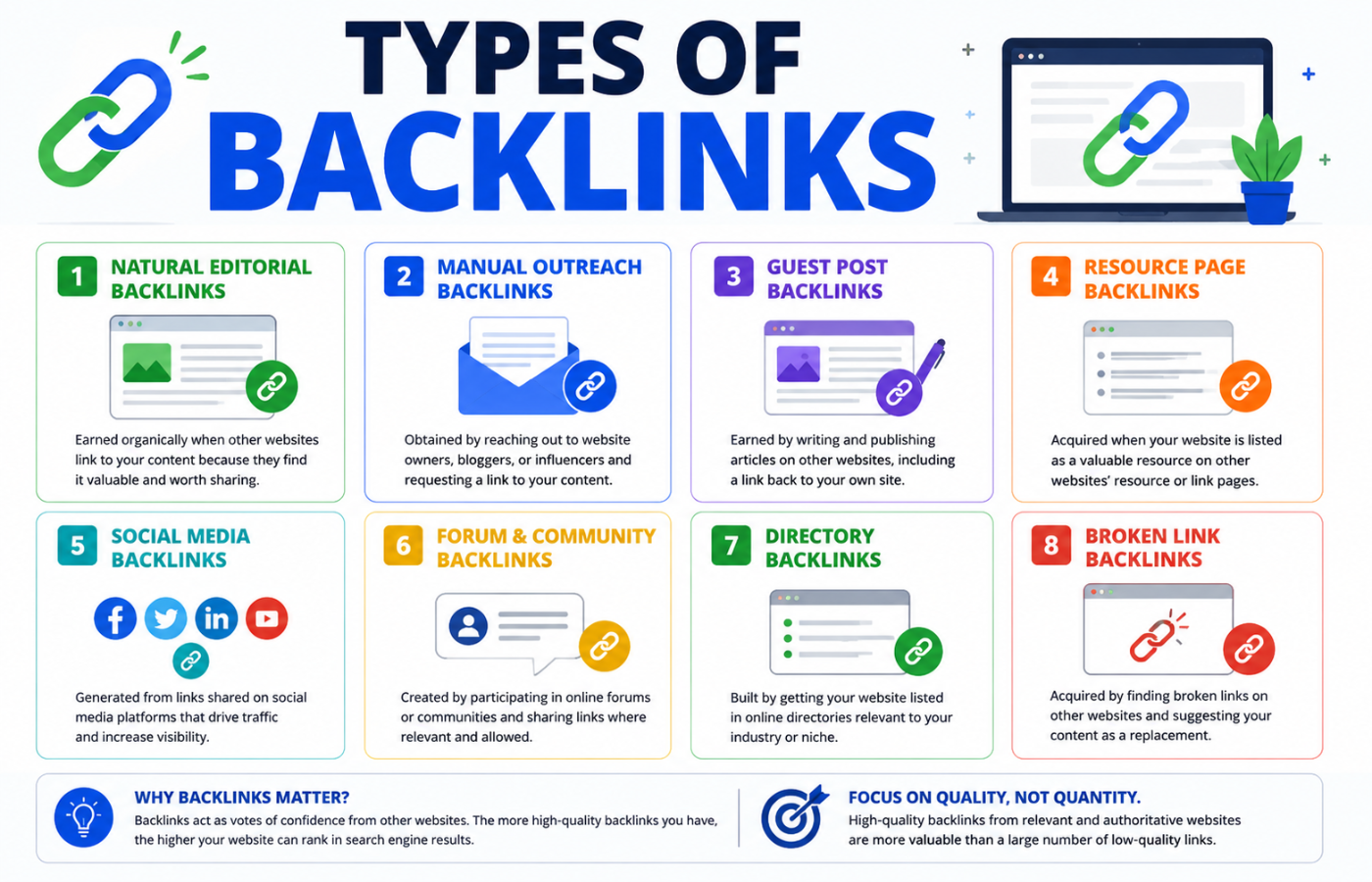
Editorial backlinks: Earned naturally when someone finds your content valuable (most valuable)
-
Guest post backlinks: Links from articles you write for other sites (valuable if done well)
-
Directory backlinks: Links from business directories (low value but useful for local SEO)
-
Social media backlinks: Links from social platforms (nofollow, but drive traffic)
-
Comment backlinks: Links from blog comments (low value, often nofollow)
-
Backlinks from broken links: Finding and replacing broken links on other sites (valuable)
What Makes a Bad Backlink
Not all backlinks help. Bad backlinks can actually hurt your rankings:
-
Spammy directories (low-quality, irrelevant sites)
-
Link farms (networks created solely for link exchange)
-
Irrelevant sites (links from completely unrelated industries)
-
Over-optimised anchor text (too many exact-match keywords)
-
Paid links (unless clearly marked as sponsored)
-
Links from penalised sites (guilt by association)
How to Build Quality Backlinks
1. Create Linkable Assets
Publish content that others naturally want to reference:
-
Original research and data
-
Infographics and visual data
-
Comprehensive guides (pillar content)
-
Case studies with real results
-
Free tools or calculators
2. Guest Blogging (Done Right)
Write high-quality content for reputable industry blogs. Focus on providing genuine value, not just getting a link.
3. Broken Link Building
Find broken links on relevant sites and suggest your content as a replacement. This helps site owners fix errors while earning you a backlink.
4. Digital PR
Get mentioned in news outlets, industry publications, and podcasts. Even unlinked mentions can lead to links later.
5. Resource Page Outreach
Find resource pages in your industry and suggest your content as a valuable addition.
6. Competitor Analysis
Use tools like Ahrefs or Semrush to see where competitors get their backlinks — and target the same sources with better content.
7. Testimonials and Reviews
Write testimonials for products or services you use — companies often publish these with a link back to your site.
Common Backlink Mistakes
| Mistake | Why It Hurts |
|---|---|
| Buying backlinks | Google penalises paid links aggressively |
| Ignoring link quality | Low-quality links can trigger spam penalties |
| Over-optimised anchor text | Too many exact-match links look manipulative |
| No link diversity | All links from one source looks unnatural |
| Ignoring nofollow links | They still drive traffic and can benefit your brand |
Tools for Backlink Analysis
| Tool | Best For |
|---|---|
| Ahrefs | Comprehensive backlink analysis, competitor research |
| Semrush | Backlink audit, toxic link identification |
| Moz Link Explorer | Domain Authority, spam score |
| Google Search Console | See who links to you (free) |
| Majestic | Trust Flow, Citation Flow metrics |
Measuring Backlink Success
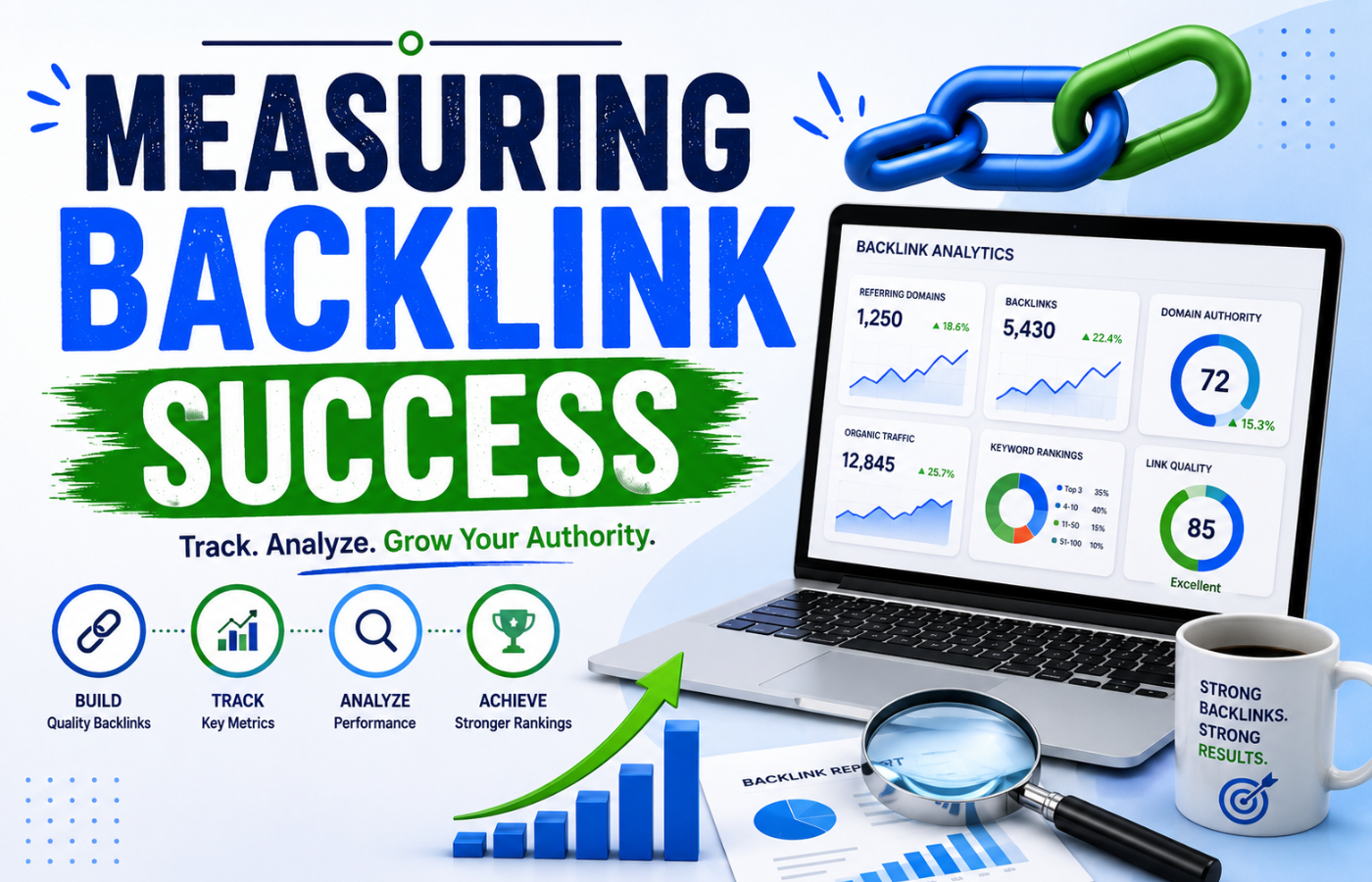
Track these metrics monthly:
-
Domain Authority (DA) or Domain Rating (DR)
-
Total backlinks and referring domains
-
New backlinks acquired (monthly growth)
-
Lost backlinks (keep an eye on declines)
-
Organic traffic growth (correlates with link building)
-
Keyword rankings for target terms
Conclusion: Backlinks Remain Essential
The importance of backlinks in SEO has not diminished — it has evolved. While Google now evaluates authority and trust in more sophisticated ways, backlinks remain a cornerstone of search visibility and successful Organic SEO strategies. Quality trumps quantity, relevance beats randomness, and earned links outperform purchased ones. Invest in creating genuinely valuable content that others want to reference, build relationships in your industry, and monitor your backlink profile regularly. By focusing on authentic link-building practices, you can strengthen your Organic SEO efforts and achieve sustainable long-term rankings.
Want a backlink strategy that builds authority, drives referral traffic, and helps you outrank competitors — without risky shortcuts?
Get in touch with Orbitix today.