







Localized SEO for LLMs: Winning Visibility in AI Search Results
How LLMs Are Changing Local Discovery
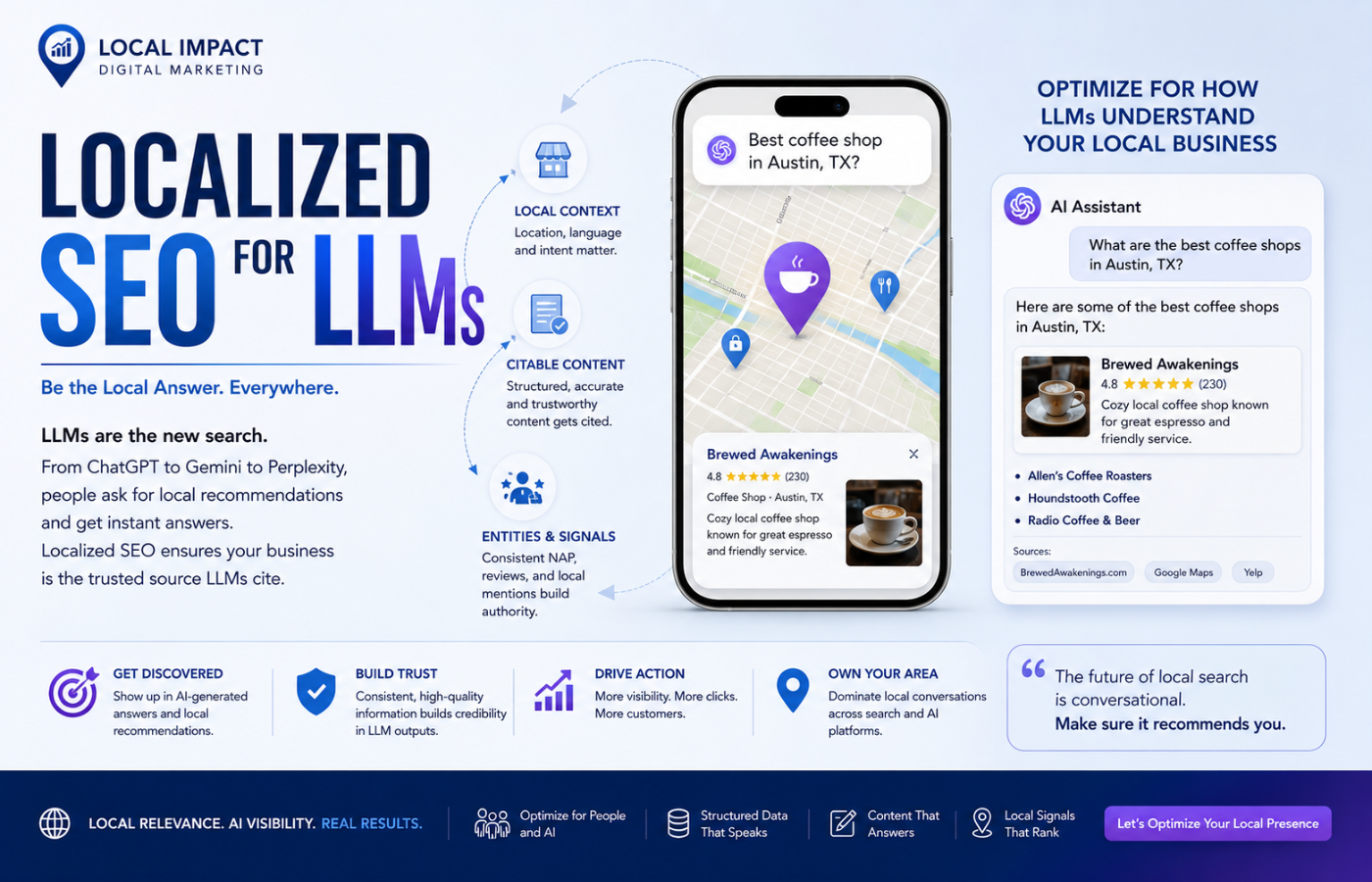
Unlike traditional search engines that rank listings based on proximity and backlinks, LLMs interpret language and infer meaning from patterns across your entire digital footprint. They don’t just scan your website—they analyze reviews, schema markup, citations, and content to decide whether your business is the right answer for a local query.
Key Strategies for Localized SEO for LLMs
Effective localized SEO for LLMs requires a multi-layered approach to build trust and clarity for AI systems:
1. Consistency Is Your New Currency
LLMs detect uncertainty when your business information varies across platforms. Ensure your Name, Address, Phone Number (NAP), hours, and business description are identical everywhere—your website, Google Business Profile, social platforms, and directories. Inconsistency signals confusion, and AI models will choose competitors with stronger, clearer signals.
2. Leverage Schema Markup as a Source of Truth
Structured data helps LLMs extract accurate facts about your business without guessing. Use LocalBusiness schema with service area definitions, geo-coordinates, opening hours, and attributes like “wheelchair accessible” or “pet-friendly.” Complete schema markup builds entity strength, which increases your chances of being cited in AI-generated answers.
3. Build Contextual Authority Through Third-Party Mentions
AI models prioritize trust signals from authoritative sources. Earn mentions in editorial publications, local news, and industry directories—not just generic citations. Contextual links from trusted publishers carry more weight with LLMs than simple directory listings. Getting featured in “best of” lists or community guides dramatically improves AI visibility.
4. Create Hyper-Local, Conversational Content
LLMs reward content that speaks directly to local communities. Write about neighborhood-specific issues, local landmarks, seasonal challenges, and cultural details. Structure your content with clear headers, natural-language FAQs, and direct answers to real customer questions. Instead of “HVAC services Austin,” address: “What’s the fastest way to fix an AC unit in Austin’s summer heat?”
5. Prioritize Reviews and Sentiment Analysis
Reviews are critical trust signals for LLMs. The language inside reviews helps AI understand your services and location. Encourage customers to mention specific neighborhoods and services. Respond professionally to all reviews. Research shows businesses with 4.2+ Google ratings appear more frequently in AI results, with featured businesses averaging 4.5–4.7 stars.
6. Ensure Your Content Is Machine-Readable
AI doesn’t browse—it crawls, reads, and extracts meaning. 86% of AI citations come from brand-managed sources like websites, listings, and reviews. Structure your content with semantic HTML, clear headings, and crawlable text. Pages behind complex JavaScript may not render fully for AI crawlers, making you invisible to systems that drive discovery.
7. Create Structured Local Pages at Scale
For multi-location businesses, each location needs its own detailed, structured page. Include unique local content—not just duplicated templates with swapped city names. Highlight local services, promotions, nearby landmarks, and region-specific FAQs. Pages with rich location data are far more likely to appear for high-intent, unbranded queries.
Tracking Success in the LLM Era
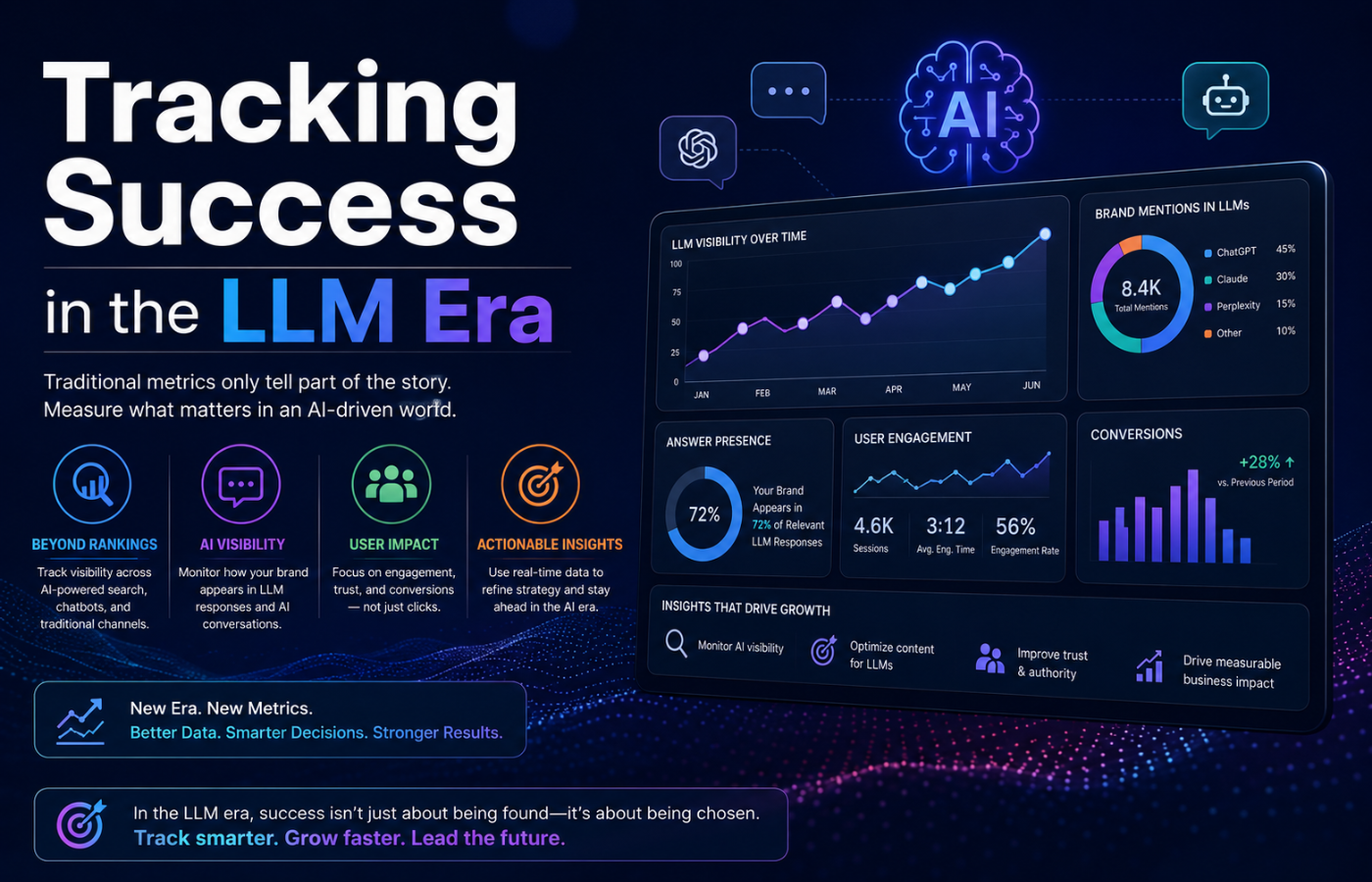
Traditional rankings no longer tell the full story. Monitor:
-
Brand mentions in AI-generated answers
-
Referral traffic from AI platforms
-
Review volume and sentiment trends
-
Google Search Console impressions
-
Increases in unlinked brand mentions
Conclusion: Clarity Wins in AI Search
Want to win AI search visibility and ensure your business is the answer LLMs recommend to local customers?
Get in touch with Orbitix today.