





How to Choose the Right Web Design Packages for Your Business
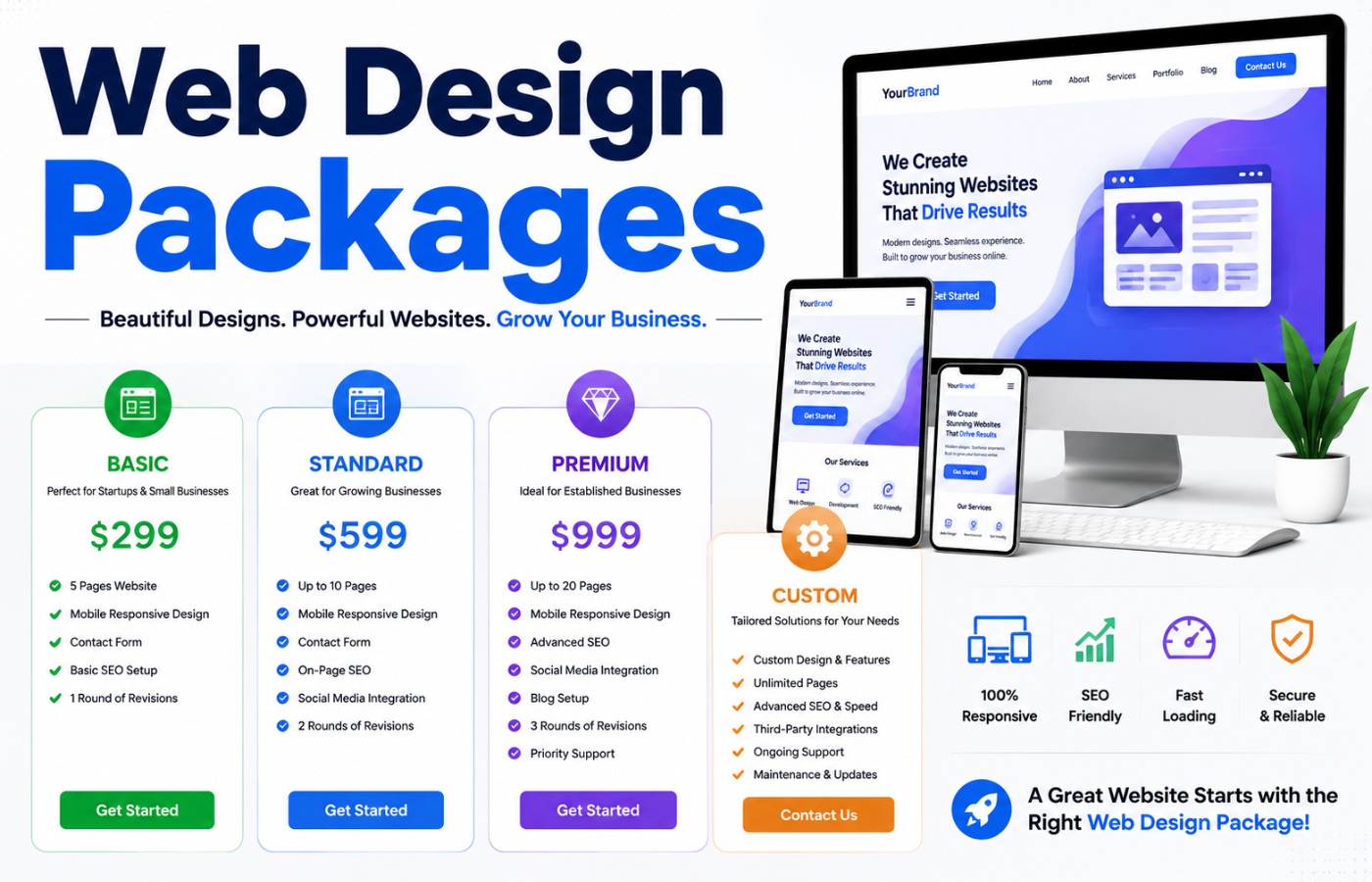
Web design packages come in every shape, size, and price point — from bargain-basement templates to fully custom enterprise solutions. For business owners, the challenge is not finding a designer but decoding what each package actually delivers. A low-cost offer might seem attractive until you realise it excludes mobile optimisation, ongoing support, or even basic SEO. Conversely, the most expensive package may include features you will never use. Businesses looking for a unique online presence often benefit from bespoke website design, which is tailored to their specific goals, branding, and customer needs rather than relying on generic templates. Understanding how to evaluate web design packages ensures you invest in exactly what your business needs to generate leads, build trust, and drive sales — without overpaying for unnecessary extras.
Why Most Businesses Choose the Wrong Package
The most common mistake business owners make is choosing based solely on price or on the number of “pages included.” A five-page package might be perfect for a local service business but crippling for an e-commerce store with 200 products. Alternatively, an unlimited-page package might sound great, but if the design quality is poor or load speeds are slow, those pages will never rank. The right package balances features, scalability, and your specific customer journey.
What to Look for in Web Design Packages Before You Buy
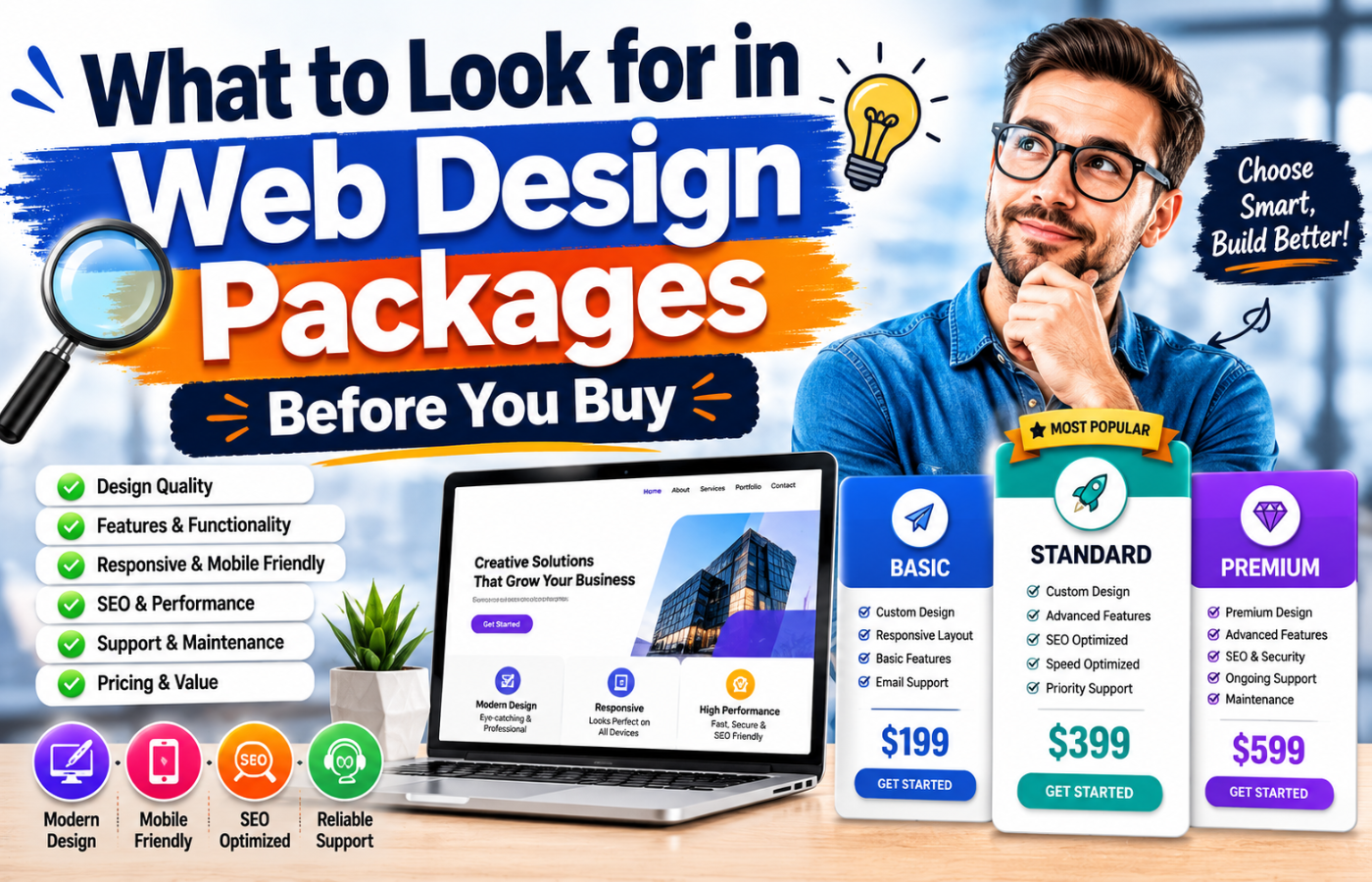
Not all web design packages are created equal. Use this checklist to compare offers side-by-side:
1. Mobile Responsiveness (Non-Negotiable)
Over 60% of web traffic comes from smartphones. If a package does not explicitly include mobile-first design or responsive testing, walk away. Ask to see live mobile examples of their previous work.
2. Core Web Vitals & Speed Optimisation
Google penalises slow websites. A quality package should include image compression, clean code, and caching setup. Request a guaranteed page speed score (e.g., 80+ on Google PageSpeed Insights).
3. Content Management System (CMS) Access
Will you own your site, or are you locked into a proprietary builder? Reputable web design packages provide access to WordPress, Webflow, or another standard CMS so you can make basic edits without paying developer fees.
4. On-Page SEO Setup
A beautiful site that nobody finds is useless. Your package should include meta titles, descriptions, header tags, image alt text, and XML sitemap generation. Some packages also include basic keyword research.
5. Contact Forms & Lead Capture
At minimum, expect a custom contact form with spam protection and email notifications. Advanced packages include CRM integration (Salesforce, HubSpot, Mailchimp) and booking systems.
6. Ongoing Maintenance & Support
Websites break, plugins need updates, and security threats emerge. Does the package include monthly maintenance, or will you pay hourly for every fix? The best web design packages offer tiered support plans.
7. E-Commerce Functionality (If Relevant)
For product-based businesses, verify that the package supports payment gateways (Stripe, PayPal), inventory management, SSL certificates, and abandoned cart recovery. Not all packages include these.
8. Training & Handover
Who will manage the site after launch? Quality packages include 1-2 hours of screen-share training and a video library of common tasks (adding a blog post, changing hours, uploading a product).
Red Flags to Avoid in Web Design Packages
-
“Unlimited revisions” without defined timelines (leads to project paralysis)
-
No contract or scope of work document (scope creep will cost you)
-
Ownership clause that keeps your design hostage (you should own everything after final payment)
-
Prices that seem too good to be true (usually mean template reuse, stock photos, or offshore outsourcing with time zone conflicts)
Package Types Explained: Which One Fits Your Business?
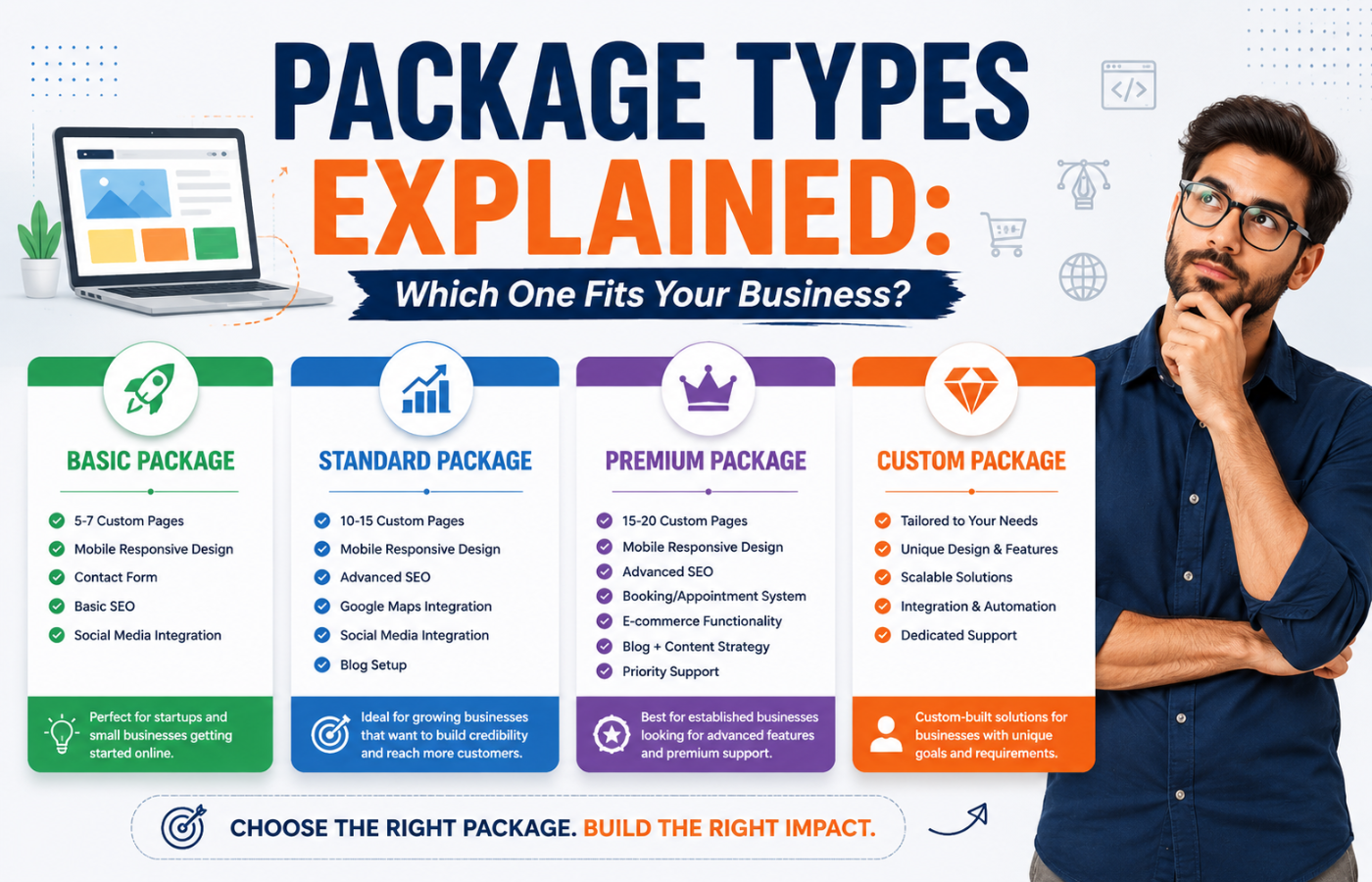
| Package Tier | Best For | Typical Inclusions | Average Investment |
|---|---|---|---|
| Starter | Freelancers, startups, single-location service businesses | 3-5 pages, mobile responsive, contact form, basic SEO | £1,500 – £3,000 |
| Professional | Growing SMEs, restaurants, medical practices | 8-12 pages, blog integration, CMS, speed optimisation, 3 months support | £3,500 – £7,000 |
| E-Commerce | Retail, product-based businesses | 50+ products, payment gateway, inventory, SSL, cart recovery | £6,000 – £15,000 |
| Enterprise | Large organisations, franchises, multi-location | Custom design, advanced integrations, 24/7 support, SLA | £15,000+ |
Questions to Ask Before Signing Any Package
-
“What is NOT included in this price?” (e.g., stock photography, copywriting, logo design, ongoing hosting)
-
“Who owns the design and code after completion?”
-
“What is your revision and approval process?”
-
“Can you provide three local client references with live sites?”
-
“What happens if I need a change after launch?”
Conclusion: Invest in Value, Not Just Price
The cheapest web design packages often become the most expensive when you factor in lost leads, slow support, and eventual redesign costs. Conversely, the most expensive package may include features you will never touch. This is why businesses should look for solutions that combine website development and SEO, ensuring their site is not only visually appealing but also capable of attracting and converting potential customers. The right package sits in the middle — delivering everything your specific business needs to convert visitors into customers, with room to scale as you grow.
Want a clear, transparent web design package tailored exactly to your business goals — with no hidden fees or surprises?
Get in touch with Orbitix today.