






What Constitutes a Good Website? Key Features Every Business Needs
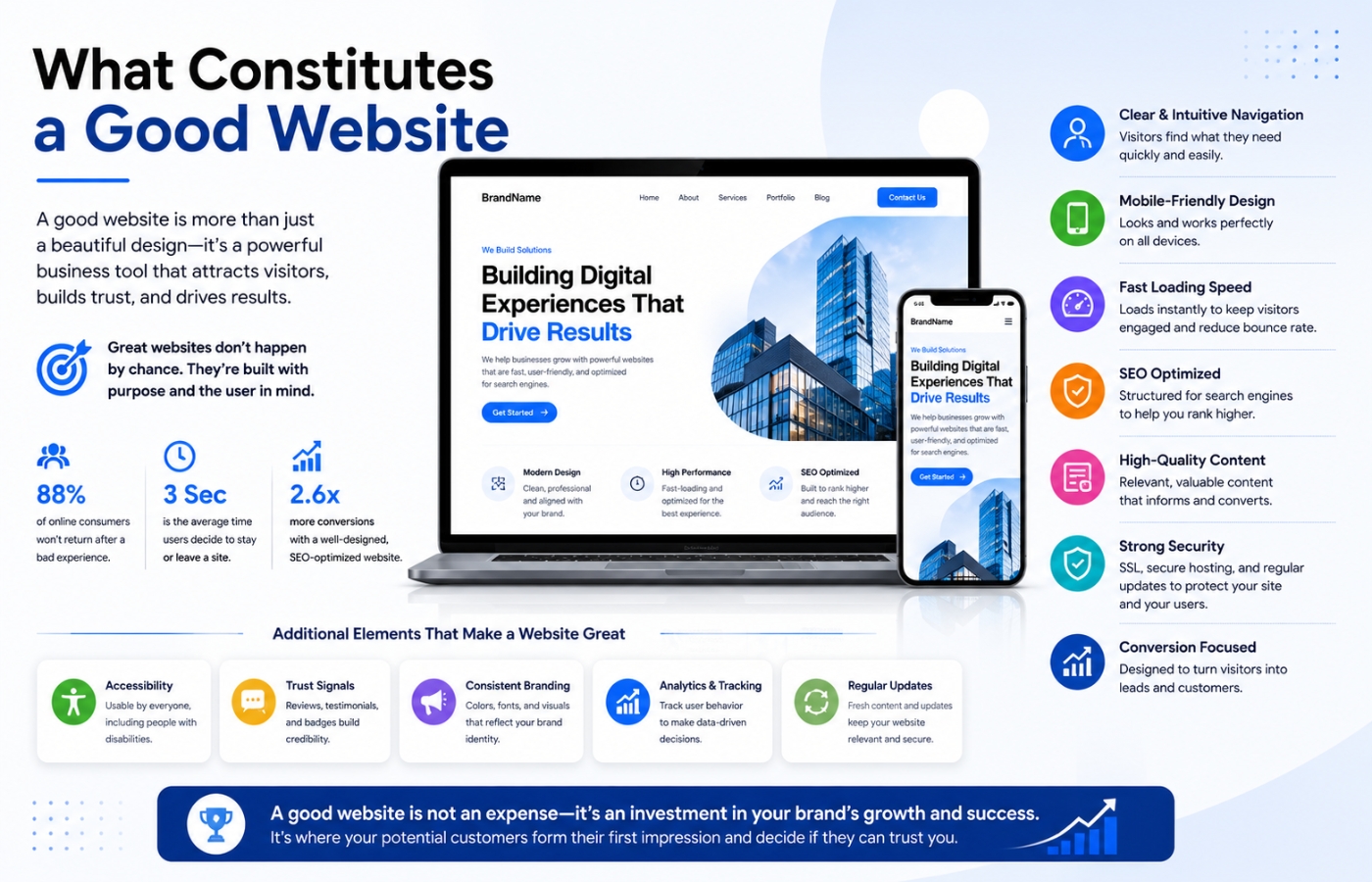
In today’s Answer Engine Optimization (AEO) landscape, search engines and voice assistants pull answers directly from well-structured websites. If your site doesn’t clearly communicate what you do, why you matter, and how to buy within the first few seconds, you’re losing customers to competitors who have mastered these principles.
The Non-Negotiable Features of a High-Performing Website
Let’s move beyond opinions and look at data-backed features that define what constitutes a good website for businesses in any industry.
1. Speed That Respects Your Visitor’s Time
Forty percent of users abandon a site that takes more than three seconds to load. A good website loads in under two seconds on mobile devices. This requires:
-
Compressed images (under 200KB each)
-
Minimal JavaScript and render-blocking resources
-
A fast hosting provider with CDN (Content Delivery Network)
2. Mobile-First Design (Not Mobile-Friendly)
“Mobile-friendly” is the baseline. A good website is built for thumbs, not cursors. That means:
-
Buttons at least 48px tall with adequate spacing
-
Text that remains readable without pinching to zoom
-
Navigation menus that unfold logically on small screens
3. Clarity Above All Else
Within five seconds, a visitor should answer three questions:
-
What do you offer? (Headline)
-
Why should I care? (Subheadline)
-
What do I do next? (Primary call-to-action)
If your hero section says “Innovative Synergy Solutions” instead of “Affordable Accounting for Freelancers,” you’ve already lost them.
4. Answer Engine Optimization (AEO) Structure
Search engines now reward websites that directly answer spoken and typed questions. A good website anticipates user intent by including:
-
Clear H2 headers phrased as questions (“How much does shipping cost?” instead of “Pricing”)
-
Bulleted lists and tables for comparison content
-
FAQ schema markup so answers appear in “People also ask” boxes
5. Trust Signals That Convert Skeptics
Visitors are naturally cautious. Prove credibility with:
-
Real customer testimonials with photos and full names
-
Logos of media features or security badges (SSL, money-back guarantee)
-
Clear contact information: phone, email, and physical address in the footer
-
An “About Us” page that shows real people and real stories
6. A Single, Obvious Goal Per Page
The biggest mistake on most websites is asking visitors to do too much. A good website gives one primary action per page:
-
Homepage → “See our services”
-
Product page → “Add to cart”
-
Blog post → “Download the full guide”
Secondary links (social media, other blog posts) should never compete with the main conversion goal.
The Ultimate Checklist: Does Your Website Qualify?
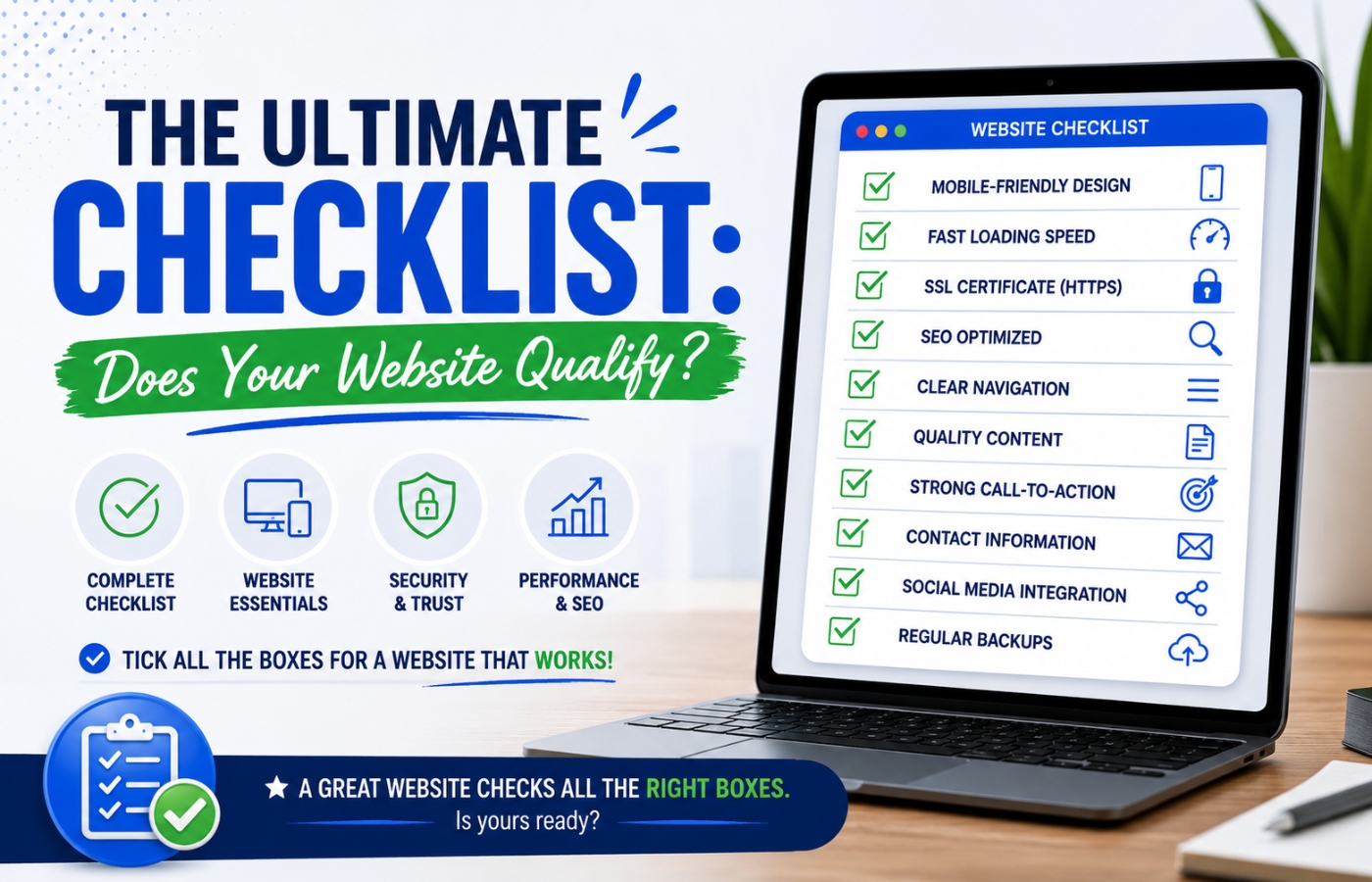
Run your current site through these seven diagnostic questions:
| Question | Pass/Fail |
|---|---|
| Does the homepage load in under 2 seconds on 4G? | ☐ |
| Can a user tap any button comfortably on an iPhone SE? | ☐ |
| Is your primary CTA visible without scrolling? | ☐ |
| Do your H2s answer likely voice search questions? | ☐ |
| Have you added FAQ schema to at least 3 pages? | ☐ |
| Is your phone number click-to-call on mobile? | ☐ |
| Can a new visitor explain what you sell in 5 seconds? | ☐ |
If you failed three or more, your website is underperforming—and costing you customers.
Why Most Businesses Settle for “Good Enough”
Mediocre websites survive because business owners compare themselves to local competitors with equally bad sites. But what constitutes a good website today will be the minimum standard tomorrow. Voice search, AI overviews, and core web vitals are not trends—they are permanent shifts in how people find information. This is why investing in website development and SEO is no longer optional; businesses need websites that are fast, user-friendly, search-engine optimized, and capable of adapting to evolving digital expectations.
Investing in a truly good website means investing in:
-
Lower customer acquisition costs (your site converts without high ad spend)
-
Higher trust and brand authority
-
Resilience to algorithm updates (quality never goes out of style)
Start Fixing Your Website Today
You don’t need a full rebuild. Begin with three high-impact changes:
-
Compress every image using TinyPNG or Squoosh.
-
Rewrite your hero headline to state exactly what you offer.
-
Add a single, clear CTA above the fold on your homepage.
Then measure your bounce rate after 30 days. If it drops by even 10%, you’re on the right track.
Remember: A beautiful website that confuses visitors is a failure. A simple website that answers questions and drives action is a business asset. Now you know exactly what constitutes a good website—the only question left is whether you’ll build one.
Want a website that actually works for your business — not against it?
Get in touch with Orbitix today.