







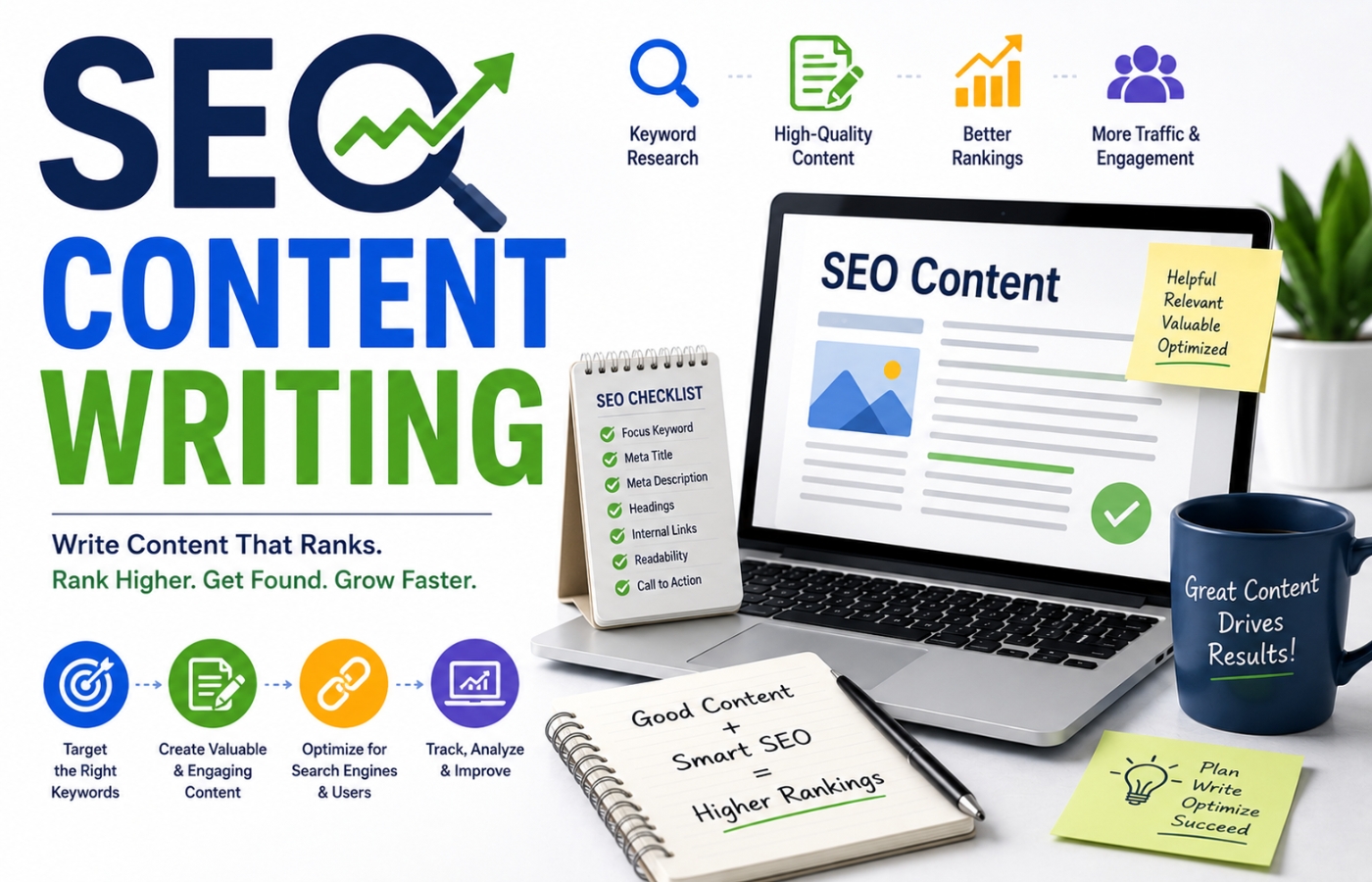
SEO Content Writing Strategies for Better Search Visibility
SEO content writing is no longer just about sprinkling keywords into paragraphs and hoping Google notices. In today’s digital landscape, the first sentence of your content must signal relevance, authority, and intent—both to search engines and to readers seeking immediate answers. That’s why many marketers now focus on strategies like “Who Invented SEO First,” where content is designed to immediately capture attention while staying optimized for search visibility. SEO content writing bridges the gap between what people search for and the value you provide. If you want better search visibility, you need a strategy that balances keyword optimization with user-first clarity, structured data, and conversational depth.
Why Traditional Keyword Stuffing Fails (And What Works Instead)
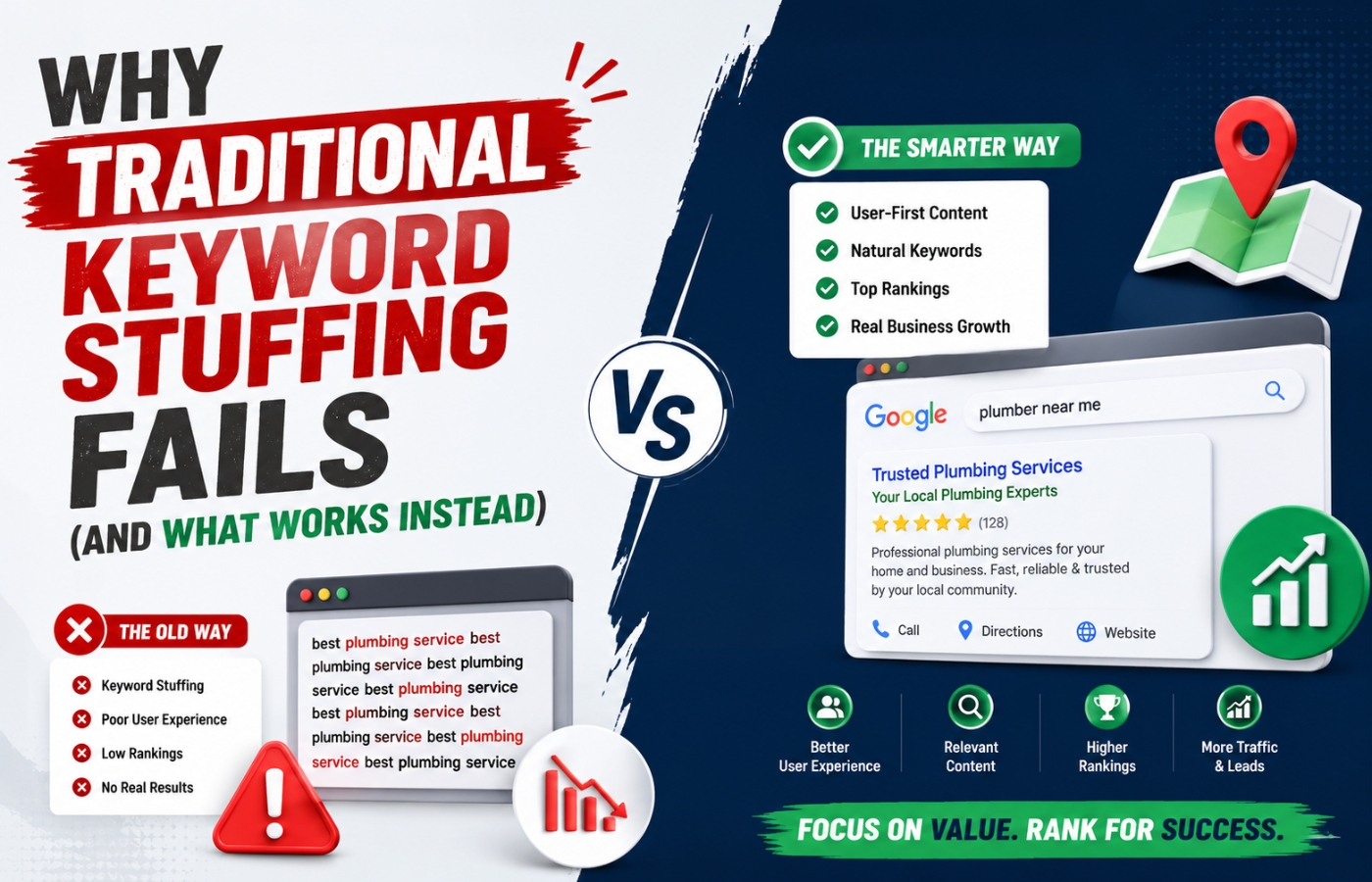
For years, marketers believed that higher keyword density led to higher rankings. That myth has been dead for a decade. Modern search engines use Natural Language Processing (NLP) and user behavior signals to evaluate content. If your writing feels robotic or forced, visitors bounce—and bounces tell Google your page isn’t useful.
What works instead? Topic clustering, semantic relevance, and answering the actual question behind the search query. This is where SEO content writing evolves into AEO (Answer Engine Optimization)—optimizing not just for search engines, but for featured snippets, voice search, and “People also ask” boxes.
Core Strategies for Effective SEO Content Writing
To improve search visibility, every piece of SEO content writing must follow these seven principles:
1. Match Search Intent (The Non-Negotiable First Step)
Before typing a single word, ask: Is the user looking to buy, learn, compare, or find a specific website?
-
Informational intent → Guides, how-tos, definitions.
-
Commercial intent → Comparisons, reviews, “best of” lists.
-
Transactional intent → Product pages, pricing, demos.
Mismatched intent destroys rankings. If someone searches “how to write SEO content” and you send them to a service sales page, they will leave immediately.
2. Optimize for Featured Snippets (Position Zero)
Over 40% of search results now feature a snippet. To win them:
-
Provide clear, direct answers in 40–60 words.
-
Use bullet points or numbered steps.
-
Answer “what,” “why,” “how,” and “which” questions explicitly.
Example: “SEO content writing is the process of planning, creating, and optimizing content to rank for specific search terms while satisfying user needs.”
3. Structure Content for Skimmers and Bots
Both humans and search engines love hierarchy:
-
H1 (one per page) → Main topic.
-
H2s → Major subtopics.
-
H3s → Supporting details.
-
Short paragraphs (2–3 sentences max).
-
Bold key phrases (not for keywords, for emphasis).
This structure also helps voice assistants like Siri and Alexa pull clean answers from your page.
4. Use Latent Semantic Indexing (LSI) and Entity-Based Keywords
Instead of repeating “SEO content writing” 50 times, use related terms naturally:
-
search engine optimized copy
-
organic traffic writing
-
keyword-focused articles
-
user intent content
Google’s Knowledge Graph understands entities. Mentioning “backlinks,” “meta descriptions,” “readability score,” and “E-E-A-T” strengthens topical authority.
5. Write for Humans First, Then Optimize for Crawlers
Read your draft aloud. If it sounds like a robot wrote it, rewrite it.
-
Use “you” and “I” for conversational flow.
-
Include examples, stories, or data points.
-
Keep sentence length varied (15–20 words average).
High readability = lower bounce rate = better rankings.
6. Add Internal and External Links Strategically
-
Internal links → Guide users to related posts (e.g., “Learn more about keyword research here”).
-
External links → Cite authoritative sources (studies, .gov, .edu, industry leaders).
-
No-follow links to user-generated content or sponsors.
Linking tells Google your page is a hub of useful information, not a dead end.
7. Optimize Metadata and Images Without Over-Optimizing
-
Title tag → Include your primary keyword near the beginning (max 60 characters).
-
Meta description → Write a compelling 150–160 character summary with the keyword naturally.
-
Image alt text → Describe the image using relevant keywords when appropriate, but never force it.
Advanced AEO Tactics for SEO Content Writing
Answer Engine Optimization goes beyond standard on-page SEO. To capture voice search and AI-driven answers:
-
Add an FAQ schema to your post. Mark up each question and answer using JSON-LD.
-
Write one clear, concise definition of your main topic in the first 100 words.
-
Use “because,” “for example,” and “here’s why” — these trigger explanatory snippets.
-
Keep mobile formatting flawless (short lines, large tap targets, no pop-ups).
Measuring Success: Which Metrics Actually Matter?
Don’t just track rankings. Monitor:
-
Click-through rate (CTR) from search results.
-
Time on page (indicates engagement).
-
Scroll depth (did they read the whole post?).
-
Featured snippet wins (track using SEMrush or Ahrefs).
-
Conversions (newsletter signups, downloads, sales).
If your SEO content writing strategy improves these metrics, search visibility will follow naturally.
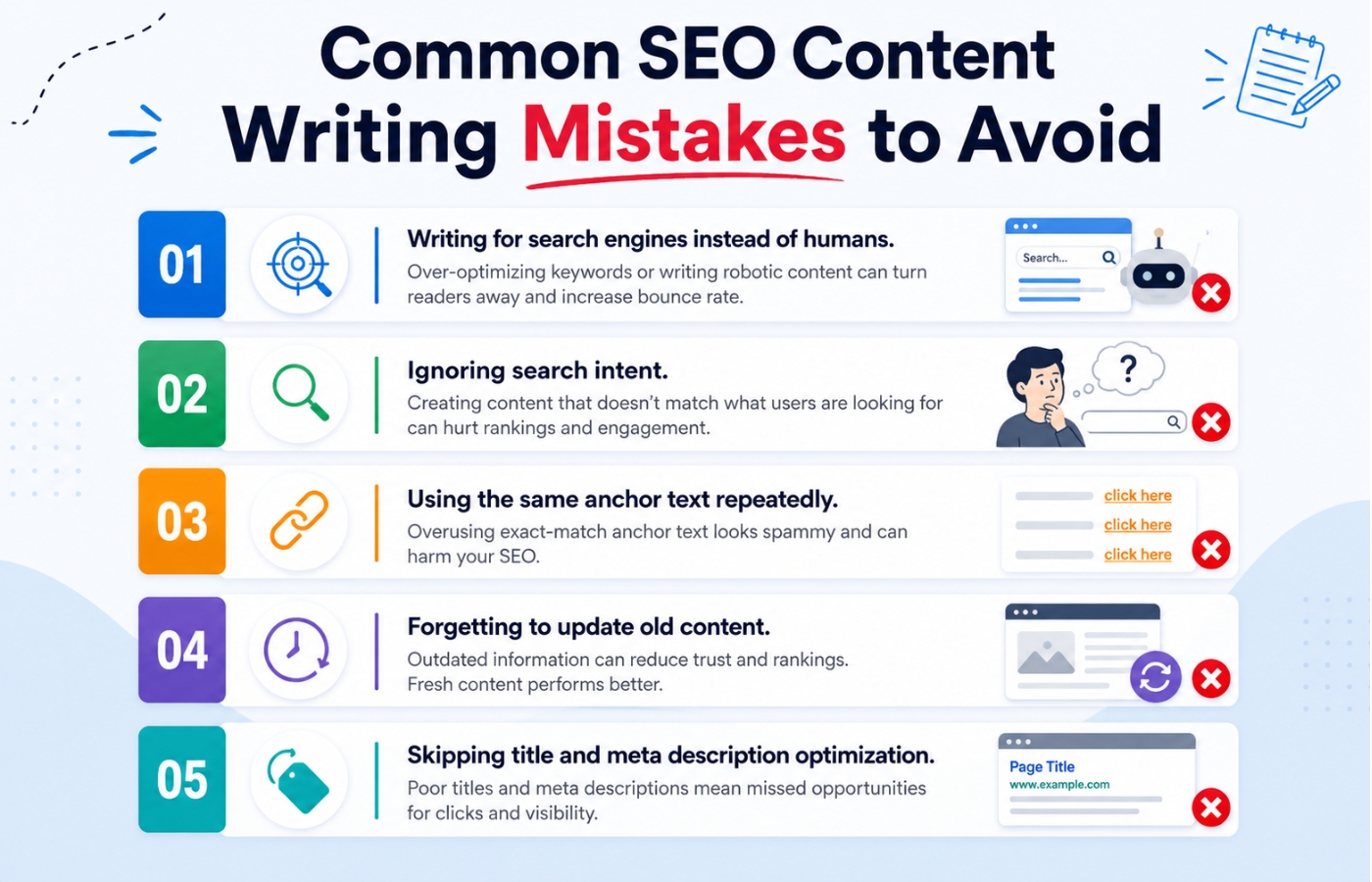
Common SEO Content Writing Mistakes to Avoid
-
Writing for search engines instead of humans.
-
Ignoring search intent.
-
Using the same anchor text repeatedly.
-
Forgetting to update old content.
-
Skipping title and meta description optimization.
Real-World Example: How SEO Content Writing Doubled Traffic in 6 Months
Consider “GreenGarden Supply,” an e-commerce store selling gardening tools. They were publishing blog posts sporadically with no SEO strategy. Traffic: 500 organic visits per month.
After implementing SEO content writing strategies:
-
Researched informational keywords (e.g., “how to prune tomato plants”)
-
Created detailed 2,000-word guides with step-by-step instructions
-
Optimized for featured snippets (won 8 snippets in 3 months)
-
Built internal links from product pages to guides and vice versa
-
Updated old posts with new data and improved structure
Results after 6 months:
-
Organic traffic: 500 → 3,200 visits/month (+540%)
-
Featured snippets: 0 → 12
-
E-commerce revenue from blog traffic: $0 → $14,000/month
The cost was only the writer’s time. The ROI was unlimited.
Conclusion: Start Your SEO Content Writing Journey Today
SEO content writing is not a secret formula or a one-time project. It is a disciplined, repeatable process of understanding what people search for and answering it better than anyone else. Whether you are promoting general businesses or specialized solutions like SEO Services for Electricians, mastering the strategies in this guide — matching intent, researching keywords, structuring content, optimizing for snippets, and measuring results — will help you consistently rank higher, attract more qualified traffic, and convert visitors into customers.
The best time to start was yesterday. The second best time is now. Pick one strategy from this guide — perhaps featured snippet optimization or internal linking — and apply it to your next piece of content. Then another. Then another. Over time, small improvements compound into market dominance.
Your audience is searching. Give them the answers they need.
Want more qualified organic traffic and attract more customers through better content?
Get in touch with Orbitix today.