







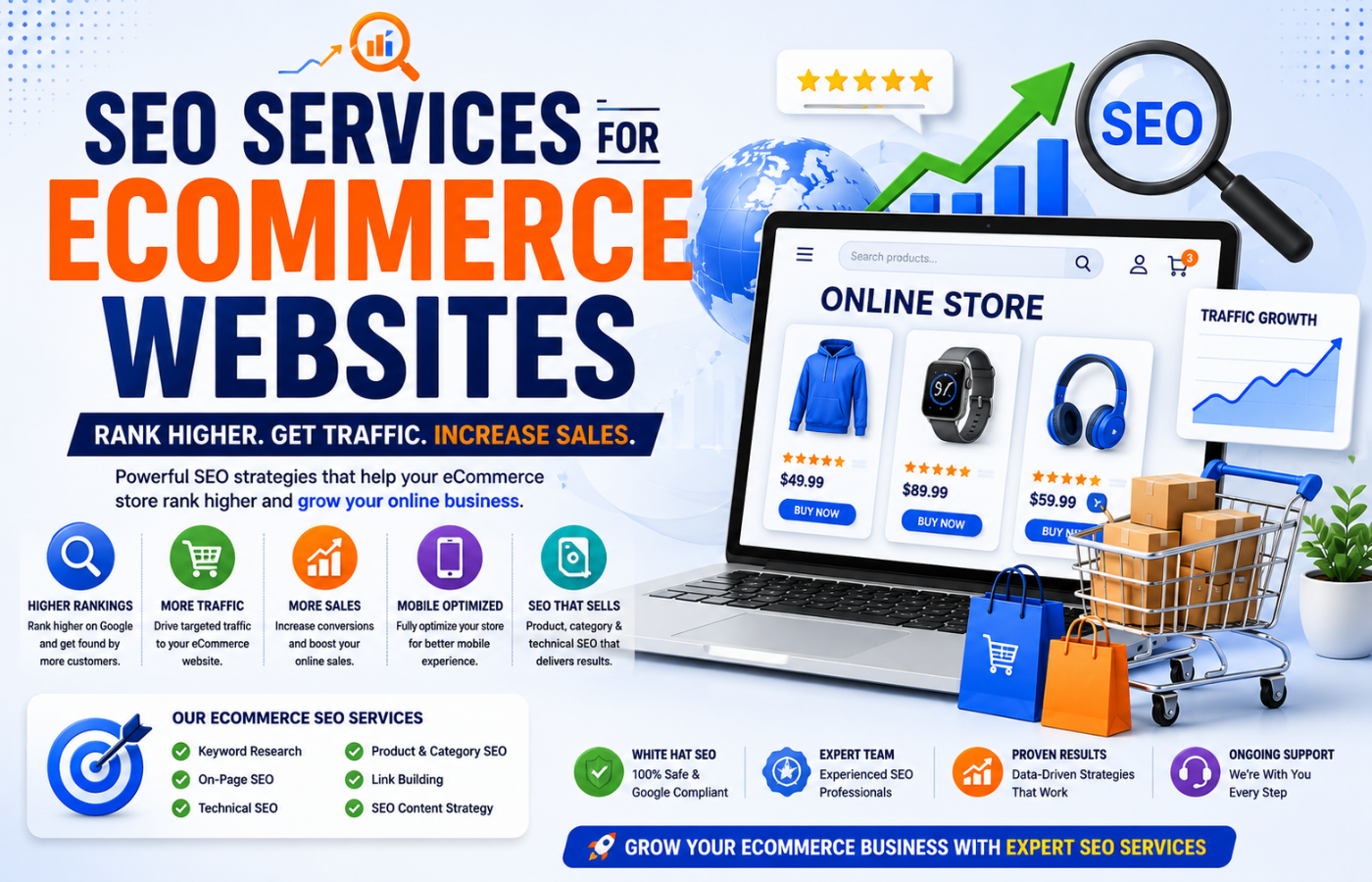
Top Benefits of Investing in SEO Services for Ecommerce Websites
Why Ecommerce SEO Beats Paid Ads Long-Term
PPC campaigns stop the second your budget runs out. Social media algorithms change overnight. But a well-optimised product page ranks for years. Shoppers searching for “leather messenger bag” or “wireless headphones under £50” have high commercial intent — they are ready to buy. SEO services for ecommerce websites capture this traffic at the exact moment of decision, often at 5-10x lower cost per acquisition than paid channels.
Key Benefits of SEO Services for Ecommerce Websites 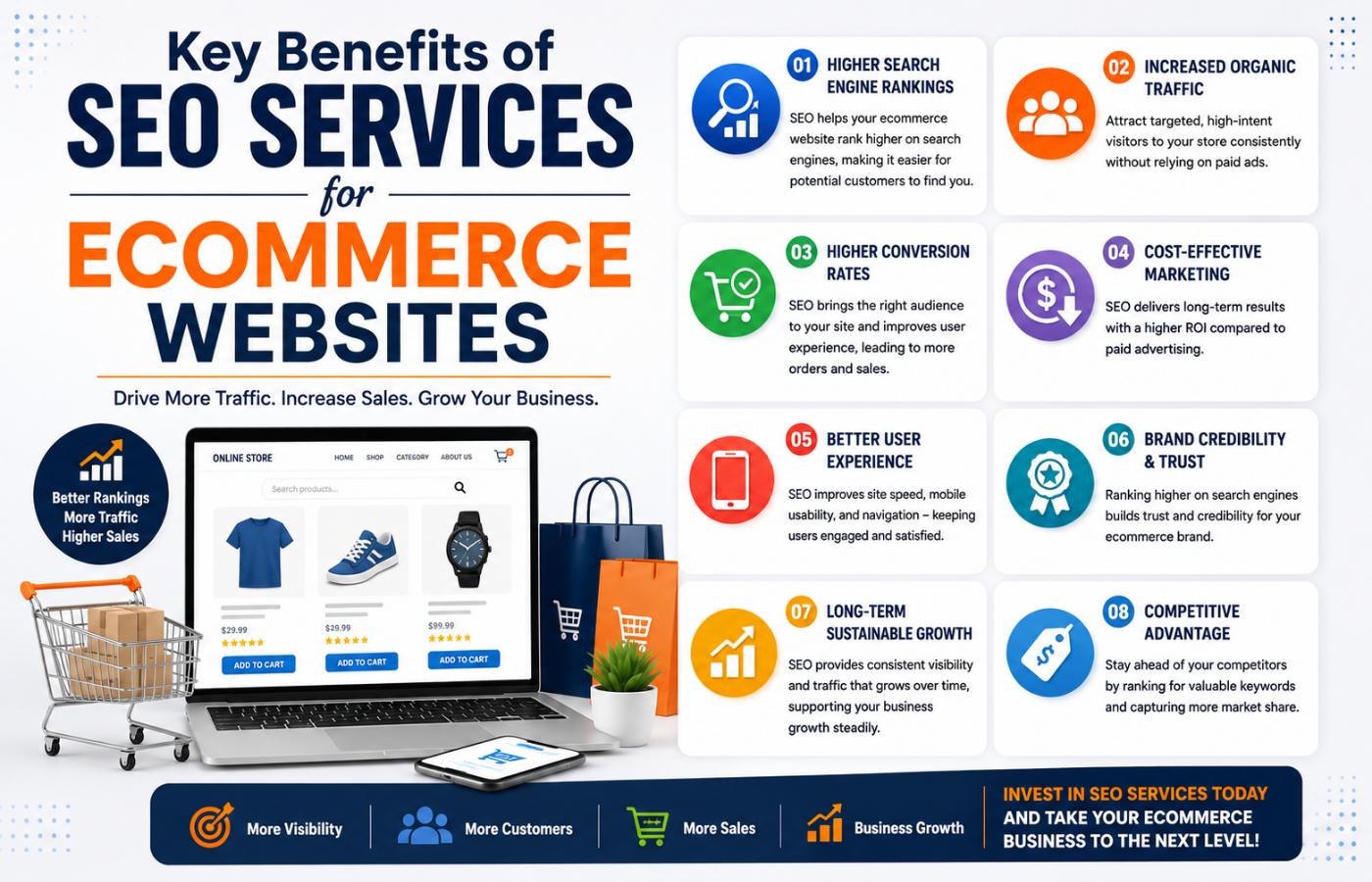
Professional SEO services for ecommerce websites deliver these measurable advantages:
1. Higher Organic Rankings for Product Pages
Standard ecommerce sites suffer from thin content, duplicate descriptions, and poor internal linking. SEO services fix this with:
-
Unique product descriptions (no manufacturer copy)
-
Optimised category pages with 300-500 words of helpful content
-
Internal linking from blog posts to related products
-
Faceted navigation optimisation (preventing duplicate URL issues)
Result: Your products appear when shoppers search — not just your brand name.
2. Increased Click-Through Rates With Rich Snippets
Rich snippets make your products stand out in search results:
-
Product schema (price, availability, star rating, review count)
-
Review schema (aggregate ratings appear as stars)
-
Price drop schema (Google highlights sales)
-
Availability schema (“In stock” vs “Low stock”)
Result: Higher CTR from the same ranking position = more traffic without higher rankings.
3. Reduced Customer Acquisition Costs (CAC)
Paid ads can cost £2-£10 per click for competitive products. Organic clicks are free:
-
Lower CPC-equivalent value (calculate what you would pay for those clicks)
-
Sustainable traffic (content from 2023 still generates leads in 2026)
-
Compound growth (new pages add to existing traffic, not replace it)
Result: Higher profit margins on every sale.
4. Better Conversion Rates From Organic Traffic
Organic shoppers are further along in the buying journey than social or display traffic:
-
Higher purchase intent (they searched specifically for your product type)
-
Lower bounce rates (they found what they were looking for)
-
Higher average order value (informed buyers add more items)
Result: Organic traffic often converts at 2-5x the rate of social media traffic.
5. Long-Tail Keyword Dominance
Big competitors fight over “coffee maker” (impossible for new stores). Smart ecommerce SEO targets:
-
“Stainless steel pour over coffee maker with thermal carafe”
-
“Best espresso machine under £300 for home barista”
-
“Reusable coffee pods for Nespresso Vertuo”
Result: Lower competition, higher conversion rates, and steady sales from specific customer needs.
6. Reduced Return Rates With Accurate Product Content
Clear, detailed product content = customers get what they expected:
-
Size guides and measurement details
-
Material specifications and care instructions
-
High-quality images and video demonstrations
-
Comparison charts with competitor products
Result: Fewer returns = higher profitability per order.
7. Seasonal and Evergreen Traffic Mix
SEO delivers both:
-
Evergreen content (“leather care guide”) drives traffic year-round
-
Seasonal optimisation (“best Christmas gifts for runners”) captures holiday spikes
Result: Stable baseline traffic with predictable seasonal increases.
Ecommerce SEO Benefits vs Other Channels
| Metric | Paid Ads | Social Media | SEO |
|---|---|---|---|
| Traffic longevity | Stops when budget stops | Algorithm dependent | Years of sustained traffic |
| Cost per click | £2-£10+ | £1-£5 | £0 (organic) |
| Purchase intent | Medium | Low-Medium | High |
| ROI over 12 months | 2-4x | 1-3x | 5-10x+ |
| Scalability | Budget-limited | Audience-limited | Content and product-limited |
What Professional Ecommerce SEO Includes
-
Product page optimisation (titles, descriptions, images, schema)
-
Category page optimisation (unique content for every category)
-
Technical SEO (site speed, mobile optimisation, crawl budget)
-
Internal linking structure (blog → category → product)
-
Duplicate content resolution (faceted navigation, sorting parameters)
-
Review generation and schema (star snippets for products)
-
Shopping feed optimisation (Google Shopping integration)
Common Ecommerce SEO Mistakes
| Mistake | Fix |
|---|---|
| Duplicate manufacturer descriptions | Write unique, benefit-driven copy for each product |
| Thin category pages (just product thumbnails) | Add 300-500 words of helpful buying guidance |
| No internal linking from content | Link blog posts to relevant categories and products |
| Missing product schema | Add structured data for price, stock, ratings |
| Ignoring long-tail keywords | Create content for specific customer problems |
| Broken faceted navigation | Use canonical tags and noindex parameters |
Measuring Ecommerce SEO Success
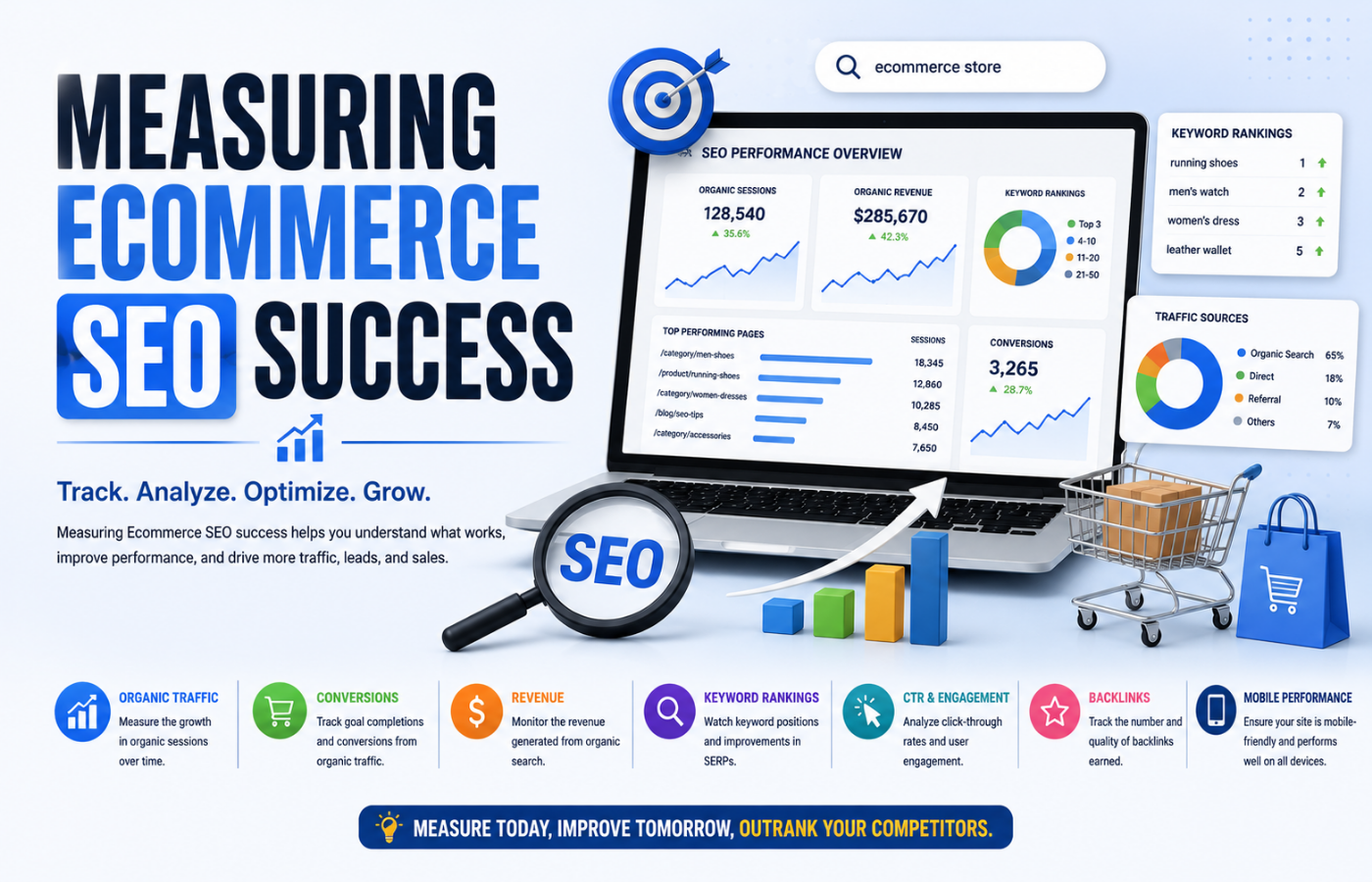
Track these metrics monthly:
-
Organic revenue (the only metric that truly matters)
-
Product page rankings for your top 50 products
-
Organic click-through rate (improving rich snippets increase this)
-
Conversion rate by traffic source (organic vs social vs direct)
-
Return rate (better product content should reduce returns)
-
Customer acquisition cost (CAC) from organic vs paid
Conclusion: SEO Is Your Most Profitable Ecommerce Channel
Want ecommerce SEO that turns your product pages into 24/7 salespeople — with lower acquisition costs and higher margins?
Get in touch with Orbitix today.